Lift Pain-Free in Brooklyn
Book your first visit at MK Chiropractic in DUMBO, Brooklyn. Same-day available.
Common CrossFit & weightlifting injuries I see in Brooklyn
In DUMBO and across NYC, I see a consistent pattern: athletes ramp up intensity, volume, or load faster than their tissues can adapt. CrossFit adds complexity (high-skill lifts under fatigue), while traditional weightlifting often adds heavy repetition—both can expose mobility limits, stability deficits, and recovery gaps.
Most injuries aren’t from one “bad rep.” They build over weeks: subtle compensation, a stiff joint, a weak link, then a flare-up during a PR attempt, a high-rep WOD, or a long training block. My job is to identify what’s actually driving your symptoms and get you back to training with a plan—not just rest and hope.
- Low back pain after deadlifts, squats, or high-rep hinging (often with glute/hip control issues)
- Shoulder pain during overhead work (press, snatch, kipping, handstand push-ups)
- Neck or upper back tightness from front rack positions, overhead holds, or heavy pulling
- Hip pain or pinching in deep squat positions (mobility + load management problems)
- Knee pain with squats, lunges, box jumps, running, or wall balls (tracking + capacity issues)
- Wrist or elbow pain from front rack, cleans, pull-ups, ring work, or gripping volume
Why these injuries happen (and why they keep coming back)
CrossFit and Olympic lifting demand range of motion, timing, and stability—often at speed. When one joint doesn’t move well (ankle, hip, thoracic spine, shoulder), another area usually pays the price (low back, knee, neck, elbow). That’s why “the pain location” isn’t always “the problem location.”
The other major driver is workload: frequency, volume, intensity, sleep, and life stress in NYC all matter. If you’re doing multiple classes, adding accessory work, sitting at a desk all day, and not recovering well, your tissues may be under-repaired. In my office, I focus on both mechanics and training load so you can progress without repeating the same cycle.
- Mobility restrictions (ankle dorsiflexion, hip rotation, thoracic extension, shoulder overhead range)
- Stability and motor control deficits (core/brace timing, scapular control, single-leg control)
- Technique breakdown under fatigue (bar path changes, early arm pull, spinal flexion under load)
- Programming errors (too many heavy days, too much volume, poor progression after time off)
- Recovery gaps (sleep, nutrition, hydration, high stress, long sitting hours)
- Old injuries that never fully rehabilitated (sprains/strains, disc flare-ups, tendon irritation)
How I evaluate a lifting injury (so treatment is targeted)
When you come to MK Chiropractic & Wellness, I start with your training story: what lifts trigger symptoms, when it started, what you changed (new cycle, new gym, more classes, new shoes, more running). I also look for red flags that would require imaging or referral—your safety comes first.
Then I assess what matters for lifters: spinal and joint motion, strength and endurance of key stabilizers, movement patterns (hinge, squat, overhead, pulling), and how your body loads. This gives us a clear working diagnosis and a plan that fits your goals—whether that’s returning to classes, competing, or simply lifting without fear.
- Orthopedic and neurological testing (to rule in/out nerve involvement or significant tissue injury)
- Joint mobility checks (ankle/hip/T-spine/shoulder) relevant to squat and overhead mechanics
- Strength and endurance screens (glutes, core/brace, scapular stabilizers, rotator cuff)
- Movement analysis of problem patterns (hinge, squat depth, overhead position, pulling mechanics)
- Training-load review (weekly volume, intensity, frequency, recent spikes, recovery habits)
Treatment that helps you heal and keep training
Effective treatment for CrossFit and weightlifting injuries isn’t just “cracking” or just stretching. I use a combination of chiropractic adjustments (when appropriate), hands-on soft tissue work, and specific rehab to restore motion, reduce pain, and rebuild capacity. The goal is not only relief—it’s better mechanics under load.
You’ll also leave with practical modifications: which movements to avoid temporarily, which variations keep you training, and how to rebuild back to your lifts safely. Many cases improve faster when we adjust training variables (range, tempo, volume, intensity) instead of shutting everything down for weeks.
- Chiropractic adjustments to improve joint mechanics and reduce protective tension (spine and extremities as indicated)
- Soft tissue techniques for overworked areas (hips, lats, pecs, forearms, calves) to restore movement quality
- Rehab exercises tailored to your lift (core bracing, hip control, scapular stability, rotator cuff, tendon loading)
- Return-to-lift progression: pain-guided exposure, smart loading, and specific warm-up strategies
- Ergonomics and recovery coaching for NYC life (desk setup, walking volume, sleep and stress considerations)
- Collaboration with your coach when helpful, so modifications match your program
Why choose MK Chiropractic & Wellness in DUMBO for CrossFit injuries
I’m Dr. Michael Khodorkovsky (Dr. Mike), and I treat a lot of Brooklyn athletes—CrossFitters, Olympic lifters, powerlifters, runners, and people who train hard between long workdays. You’ll get a clear diagnosis, a plan that respects your goals, and care that focuses on getting you back to performance, not just temporary relief.
MK Chiropractic & Wellness is located in DUMBO, Brooklyn at 81 Prospect St, Suite 504. If you’re dealing with back, shoulder, knee, hip, wrist, or elbow pain from CrossFit or weightlifting, call (347) 313-8526 to schedule. We work with many insurance plans, including UHC, Aetna, Cigna, and ASH, and we’ll help you understand your benefits.
- Locally focused care for Brooklyn and NYC lifters with training-specific assessment
- Hands-on treatment plus individualized rehab—not a one-size-fits-all protocol
- Emphasis on movement quality, load tolerance, and long-term injury prevention
- Convenient DUMBO location: 81 Prospect St, Suite 504, Brooklyn, NY
- Insurance-friendly: UHC, Aetna, Cigna, ASH (coverage varies—call to verify)
- Direct access to a chiropractor who understands barbell and CrossFit demands
Frequently Asked Questions
Should I stop CrossFit completely if I hurt my back or shoulder?
Not always. Many CrossFit and weightlifting injuries improve faster when we modify training instead of stopping everything. At MK Chiropractic & Wellness, I (Dr. Mike) identify which movements and ranges are aggravating the tissue, then we substitute safer variations (for example, tempo work, limited range, different grips, lighter loading, or swapping overhead for landmine patterns). If there are red flags—progressive weakness, numbness that’s worsening, bowel/bladder changes, or severe unrelenting pain—then we pause training and coordinate the right next steps.
Do chiropractors treat weightlifting injuries like rotator cuff pain or elbow tendonitis?
Yes. These are common in NYC lifters, especially with high pulling volume, kipping, ring work, and repetitive pressing. My approach typically combines joint-specific adjustments (when indicated), soft tissue work to address mobility and tone, and progressive strengthening (rotator cuff, scapular stabilizers, forearm extensors/flexors) so the tendon can tolerate training again. I also help you adjust volume and technique factors that keep tendon pain recurring.
How many visits will I need for a CrossFit injury?
It depends on the injury type, how long it’s been going on, and your training load. Newer strains or joint irritations often improve in a few visits, while tendon problems and recurring low back flare-ups can take longer because they require progressive loading and better movement patterns. At your first visit in DUMBO, I’ll outline a realistic plan, milestones to look for, and what you can do between sessions to speed recovery.
Can you help with wrist pain from front rack cleans and handstand work?
Absolutely. Wrist pain in CrossFit often involves a combination of limited wrist extension tolerance, stiff shoulders or thoracic spine forcing the wrist to overcompensate, and high-volume loading in front rack or gymnastics positions. I assess the wrist, elbow, shoulder, and upper back together, then treat the restrictions and build capacity with specific drills. We’ll also discuss quick gym modifications (grip, rack position, wraps/taping, and loading changes) so you can keep training without constantly re-irritating the area.
Do you take insurance for CrossFit and weightlifting injury care in Brooklyn?
Yes. MK Chiropractic & Wellness commonly works with UHC, Aetna, Cigna, and ASH (benefits and chiropractic coverage vary by plan). If you’re in Brooklyn/NYC and want to check coverage or schedule, call our office at (347) 313-8526. We’re located in DUMBO at 81 Prospect St, Suite 504, and we’ll help you understand what your plan covers before you start care.
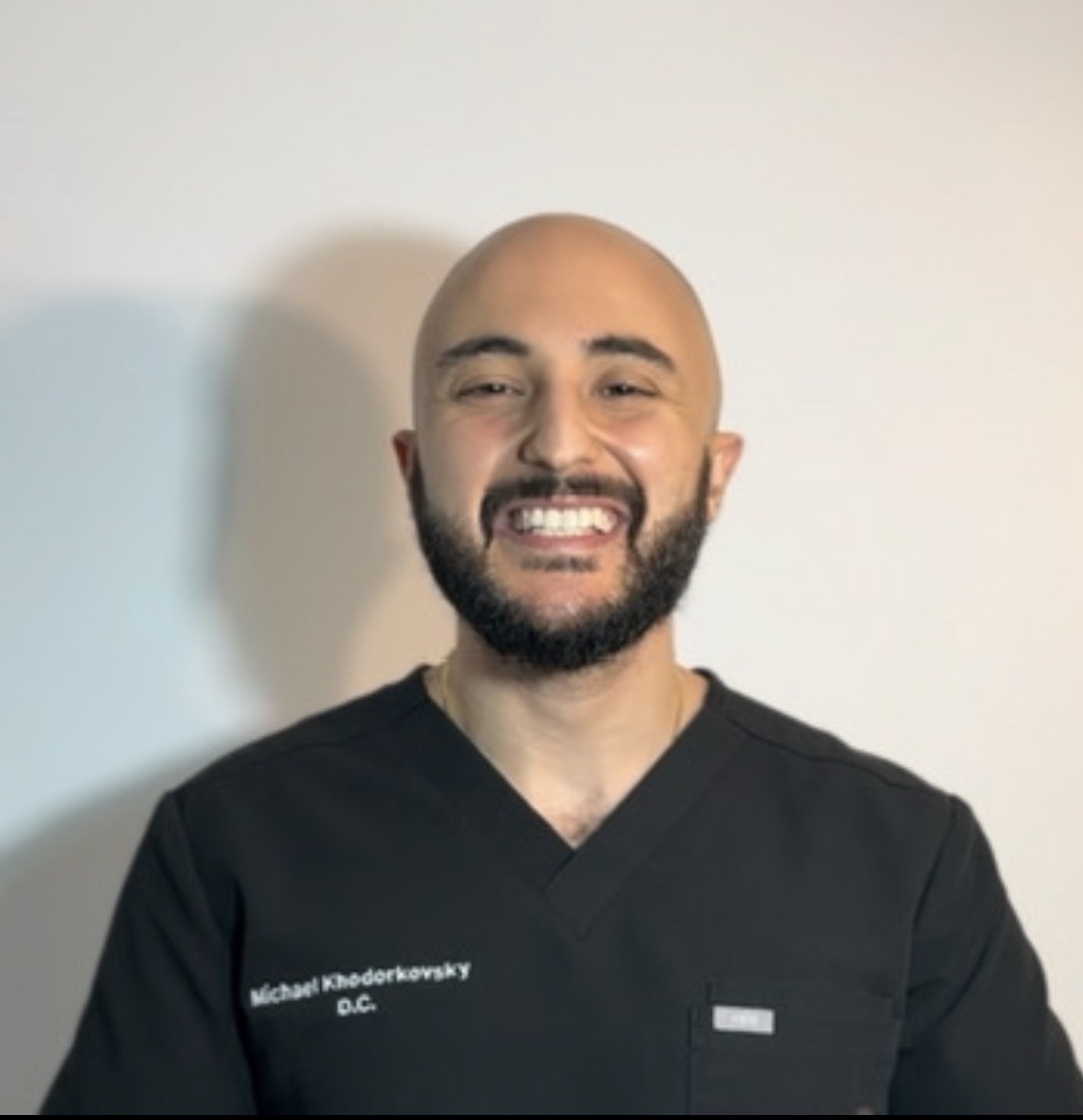
Dr. Michael Khodorkovsky, DC
Doctor of Chiropractic · MK Chiropractic & Wellness · DUMBO, Brooklyn
Dr. Mike is a Brooklyn-based chiropractor and former NCAA competitive athlete. He founded MK Chiropractic & Wellness to offer personalized, results-focused care in DUMBO — seeing every patient himself, every visit.
Ready to get started?
Book your first visit online or call the clinic. Insurance accepted — UHC, Aetna, Cigna, ASH.