Cycling Pain Relief Brooklyn
Book your first visit at MK Chiropractic in DUMBO, Brooklyn. Same-day available.
Why cycling causes overuse injuries (especially in NYC)
Cycling is low-impact, but it’s high-repetition. Thousands of pedal strokes, plus time in a flexed posture, can irritate joints and overload tendons if your body mechanics or bike setup are even slightly off. The result is often “overuse pain”—symptoms that build gradually and keep returning when you increase mileage, climb more, or ride hard after a break.
In Brooklyn and across NYC, riders deal with extra stressors: stop-and-go traffic, sprinting off lights, potholes and cobblestones, clipped-in starts, carrying bikes upstairs, and long commutes. These demands expose small mobility restrictions (hips, ankles, thoracic spine) and stability deficits (glutes, core, scapular control) that your body tries to compensate for—usually at the knees, low back, neck, or wrists.
The good news: most cycling-related pain responds very well to a targeted plan—reduce the irritation, restore motion, improve load tolerance, and address the driver (not just the symptom). That’s exactly how I treat cyclists at MK Chiropractic & Wellness in DUMBO.
Most common cycling injuries I treat in Brooklyn riders
Cycling pain tends to cluster in predictable areas. Where you feel it matters, but how it behaves matters more: when it starts (early vs late ride), what triggers it (hills, cadence, standing), and what relieves it (rest, stretching, position changes). Those clues help me determine whether the primary issue is joint irritation, tendon overload, nerve sensitivity, or a movement/bike-fit factor.
Below are the patterns I see most often in clinic. If any of these match your symptoms, it’s worth getting assessed—especially if the pain is changing your riding form, causing numbness/tingling, or lingering into daily life.
- Anterior knee pain (patellofemoral irritation): often worse with hills, higher gears, or after increasing volume
- Lateral knee pain (IT band/lateral tracking): commonly flares with longer rides or higher intensity blocks
- Achilles or calf tightness: linked to ankle mobility limits, cleat position, or sudden mileage increases
- Low back pain: prolonged flexion, limited hip extension, weak glute drive, or poor lumbar/pelvic control
- Neck and upper back pain: sustained posture, restricted thoracic mobility, and overloaded neck extensors
- Hand/wrist numbness or pain: handlebar pressure, ulnar/median nerve irritation, grip habits, and shoulder stability issues
How chiropractic care helps cycling overuse pain (what I actually do)
When you come in, my goal isn’t to “crack and hope.” I start with a clear diagnosis: orthopedic and neurological testing, joint motion assessment, soft tissue evaluation, and movement screening relevant to cycling (hip control, single-leg mechanics, thoracic rotation, ankle mobility). We also talk training load, recent changes (new bike/cleats/saddle), and what your pain does on the bike versus off the bike.
Treatment is individualized, but cycling injuries typically need a blend of joint, muscle/tendon, and nervous system work. Chiropractic adjustments can reduce joint restriction and improve motion (common areas: thoracic spine, lumbar/pelvis, hips, and sometimes the foot/ankle). I pair that with soft tissue work to calm irritated structures and restore tissue glide—especially around the quads/hip flexors, glutes, calves, and forearms.
Most importantly, you’ll leave with a plan. Overuse pain improves fastest when we combine in-office care with a specific home program and smart training modifications so your tissues can adapt without repeated flare-ups.
- Chiropractic adjustments to improve joint motion and reduce mechanical stress
- Soft tissue techniques for quads, hip flexors, glutes, calves, and forearms as needed
- Mobility work for hips, ankles, and thoracic spine to reduce compensations
- Strength and control drills (glutes, core, scapular stabilizers) to improve load distribution
- Guidance on training load, cadence, hills, and recovery to prevent recurrence
- When appropriate, coordination with bike fitting, PT, imaging, or medical referral for red flags
What you can do now: bike setup, training tweaks, and red flags
Many cycling issues calm down quickly when you reduce the trigger while we address the cause. That might mean temporarily lowering volume, easing off hard climbs, increasing cadence, or changing hand positions more frequently. Small bike setup changes can also make a big difference, but I prefer they’re guided—random adjustments can move the problem rather than solve it.
If you’re dealing with numbness, sharp pain, swelling, or symptoms that worsen quickly, don’t push through. NYC riders often try to “tough it out” because commuting is non-negotiable—so we build a plan that keeps you moving while protecting the irritated tissue.
Seek an evaluation promptly if symptoms persist beyond 7–10 days, if pain changes your pedaling pattern, or if you have radiating pain, significant weakness, or nighttime pain that doesn’t settle.
- For knee pain: lighten the gear, increase cadence, avoid repeated seated grinding climbs temporarily
- For low back pain: break up long rides, add brief standing intervals, prioritize hip mobility and glute activation
- For neck/hand issues: vary hand positions, avoid locked elbows, reduce death-grip, and check reach/handlebar drop
- Increase weekly load gradually (a conservative rule: avoid big sudden spikes in time or intensity)
- Prioritize sleep, hydration, and protein—tendons hate poor recovery
- Red flags: progressive numbness/weakness, significant swelling, fever, saddle numbness with bladder/bowel changes—get urgent medical evaluation
Why choose MK Chiropractic & Wellness in DUMBO for cycling injuries
I’m Dr. Michael Khodorkovsky (most patients call me Dr. Mike), and at MK Chiropractic & Wellness I focus on evidence-informed care that’s practical for NYC life. Cyclists come to my DUMBO Brooklyn office because they want a clear answer about what’s driving their pain, treatment that actually changes symptoms, and a plan that helps them ride (and commute) with confidence.
Our office is located at 81 Prospect St, Suite 504, DUMBO, Brooklyn, NY. If you’re dealing with cycling-related knee pain, low back pain, neck tension, or hand numbness, call (347) 313-8526 to schedule. We work with many insurance plans, including UHC, Aetna, Cigna, and ASH—my team can help you understand your benefits and options.
My approach is collaborative and results-driven: assess thoroughly, treat the right tissues and joints, then build resilience so the issue doesn’t keep coming back every time you ramp up your miles.
Frequently Asked Questions
Can a chiropractor help cycling knee pain from overuse?
Yes—when it’s approached correctly. Cycling knee pain is often tied to hip control, ankle mobility, and how forces track through the knee with repetitive pedaling. At MK Chiropractic & Wellness, I (Dr. Mike) assess joint motion (hips/ankles/pelvis), soft tissue overload (quads, IT band region, patellar tendon), and your movement pattern, then treat restrictions and build a plan to improve load tolerance so the knee stops flaring every ride.
Do I need a bike fit, or should I see Dr. Mike first?
If your pain is significant or recurring, seeing me first can be helpful because we can identify what your body is or isn’t tolerating (mobility, stability, nerve irritation). Sometimes the “fit problem” is actually a body problem—and a fit change alone won’t hold. Other times, a bike fit is exactly what you need; I’m happy to coordinate and give you specific parameters to discuss with your fitter so changes are purposeful, not trial-and-error.
What causes hand numbness or wrist pain when cycling in NYC?
Common causes include prolonged pressure on the bars (ulnar or median nerve irritation), a forward-heavy position, tight forearms, and poor shoulder/scapular support—plus NYC road vibration and potholes. At MK Chiropractic & Wellness in DUMBO, I evaluate neck and upper back mobility, nerve sensitivity, and wrist/forearm tissues, then treat the mechanical drivers and give strategies for grip, posture, and mobility/strength to reduce recurrence.
How many visits does it usually take to feel improvement?
It depends on how long the issue has been present, how irritated the tissue is, and whether you can modify training while healing. Many cyclists notice meaningful change within a few visits when the diagnosis is clear and the plan matches the driver of the pain. Chronic or repeatedly flared issues may take longer because tendons and overloaded tissues need time and progressive loading to remodel. I’ll give you a straightforward timeline after your initial exam.
Do you take insurance for cycling injury treatment in Brooklyn?
Yes. MK Chiropractic & Wellness works with many insurance plans, including UHC, Aetna, Cigna, and ASH. If you’re coming from DUMBO, Downtown Brooklyn, Brooklyn Heights, Fort Greene, Williamsburg, or elsewhere in NYC, call us at (347) 313-8526 and we’ll help verify benefits and explain your options before you start care. Our office is at 81 Prospect St, Suite 504, DUMBO, Brooklyn, NY.
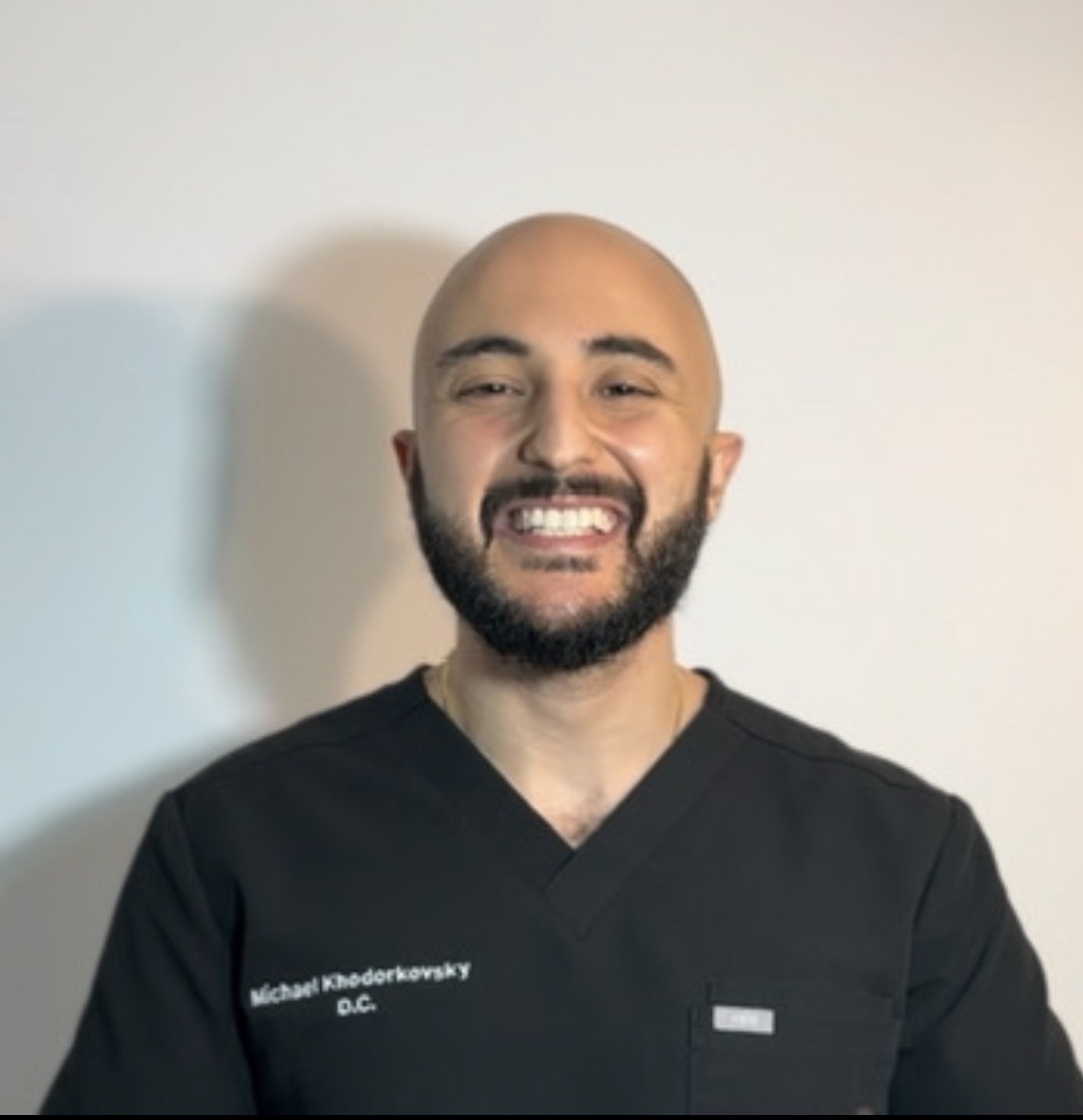
Dr. Michael Khodorkovsky, DC
Doctor of Chiropractic · MK Chiropractic & Wellness · DUMBO, Brooklyn
Dr. Mike is a Brooklyn-based chiropractor and former NCAA competitive athlete. He founded MK Chiropractic & Wellness to offer personalized, results-focused care in DUMBO — seeing every patient himself, every visit.
Ready to get started?
Book your first visit online or call the clinic. Insurance accepted — UHC, Aetna, Cigna, ASH.