Frozen Shoulder Help in Brooklyn
Book your first visit at MK Chiropractic in DUMBO, Brooklyn. Same-day available.
What frozen shoulder is—and how it usually starts
Frozen shoulder (adhesive capsulitis) is a painful, stiff shoulder condition where the joint capsule becomes irritated, thickened, and restricted. The defining issue isn’t just “tight muscles”—it’s a loss of normal joint glide and capsule mobility, which makes movements like reaching overhead or behind your back feel blocked and painful.
In my Brooklyn practice, I often see it develop after a period of reduced shoulder use: a minor strain you “rested” too long, a post-surgical sling, a fall, or even neck/upper back pain that makes you stop moving your arm normally. It’s also more common in people with diabetes, thyroid disorders, and in adults roughly 40–60, but it can show up outside that range too.
- Common symptoms: deep ache, sharp pain at end-range, stiffness, night pain, and trouble dressing
- Movements often limited: reaching overhead, reaching behind the back, putting on a bra/coat, washing hair
- Pattern tends to be progressive (it can feel like it’s “getting tighter” over weeks)
- It’s different from rotator cuff pain: strength may be okay, but motion is restricted in multiple directions
- The shoulder may feel “stuck,” especially external rotation (turning the arm outward)
Stages, red flags, and when to get imaging
Frozen shoulder is commonly described in stages: a painful “freezing” phase (increasing pain and decreasing motion), a “frozen” phase (less pain but significant stiffness), and a “thawing” phase (gradual return of mobility). The timeline varies—some people recover in months, others take longer—especially if the shoulder is forced, re-irritated, or never properly rehabilitated.
Not every stiff shoulder is adhesive capsulitis. In DUMBO and across NYC, I see plenty of cases that are actually rotator cuff tendinopathy/tear, arthritis, labral injury, or referred pain from the neck. A good exam matters because the best treatment depends on the diagnosis—and sometimes we need imaging or a referral.
- Seek urgent evaluation if you have: sudden severe weakness, visible deformity, fever/redness, numbness/tingling down the arm, or significant swelling after injury
- Consider imaging if: trauma occurred, symptoms aren’t matching exam findings, or progress stalls despite care
- X-ray can rule out arthritis or bony issues; ultrasound/MRI can evaluate rotator cuff and soft tissue
- Diabetes and thyroid conditions can make frozen shoulder more persistent—care plans should account for that
- Night pain is common, but worsening constant pain at rest deserves a closer look
How a chiropractor can help frozen shoulder (without making it worse)
As a chiropractor, my role is to restore motion and calm the irritation driving the restriction—while protecting the tissues from excessive force. Frozen shoulder often flares when it’s aggressively stretched too early. My approach is controlled: improve shoulder and upper back mobility, decrease guarding, and build tolerance with a progressive plan.
At MK Chiropractic & Wellness, I combine hands-on joint and soft tissue work with a home program tailored to your stage. We also evaluate the neck and upper back because thoracic stiffness and cervical referral patterns frequently amplify shoulder pain. When the shoulder can’t move, the body compensates—often creating neck tightness, upper trap pain, or mid-back strain—so treating the whole system matters.
- Gentle, specific shoulder joint mobilization to improve capsular glide (not aggressive yanking)
- Soft tissue treatment for protective muscle guarding (rotator cuff, pec minor, lats, upper trap)
- Thoracic spine mobility work to restore overhead mechanics and reduce compensation
- Guided rehab: isometrics, controlled range-of-motion, and gradual strengthening
- Activity and sleep-position coaching to reduce night pain and irritation
- Progress tracking: range-of-motion measurements so you can see objective improvement
What you can do at home in Brooklyn to speed recovery
The best results come from the right dose of movement—often “less force, more consistency.” If you push into sharp pain, the shoulder tends to tighten back up. If you avoid moving it, stiffness wins. The goal is frequent, tolerable motion that respects irritability, plus strength work that doesn’t flare symptoms.
I also coach patients on NYC-specific realities: carrying bags, commuting, laptop posture, and how to set up a workstation in a small apartment. Small changes—like how you wear a backpack or hold a subway pole—can make a big difference in shoulder irritation during recovery.
- Use pain as a guide: aim for mild-to-moderate stretch discomfort, not sharp or lingering pain
- Short, frequent range-of-motion sessions (2–4 minutes, multiple times daily) beat one long painful session
- Heat before gentle motion can help; ice after activity may reduce flare-ups
- Avoid heavy overhead lifting and sudden end-range stretching during the painful phase
- Sleep tips: hug a pillow in front of you or place a pillow under the arm to reduce traction pain
- Commute/life tips: switch sides when carrying groceries, keep loads close to your body, and avoid a heavy bag on the painful side
Why choose MK Chiropractic & Wellness in DUMBO for frozen shoulder
I’m Dr. Michael Khodorkovsky (Dr. Mike), and at MK Chiropractic & Wellness in DUMBO, Brooklyn, I treat frozen shoulder with a clear plan: confirm the diagnosis, reduce pain, restore shoulder and thoracic mobility, then rebuild strength so the stiffness doesn’t return. You’ll know what stage you’re in, what to do at home, and what progress should look like week to week.
Our office is located at 81 Prospect St, Suite 504, Brooklyn, NY. If you’re dealing with adhesive capsulitis and want a structured, evidence-informed approach—without being pushed through cookie-cutter care—call (347) 313-8526. We work with many insurance plans, including UHC, Aetna, Cigna, and ASH, and we’ll help you understand your benefits and options.
- Thorough exam to differentiate frozen shoulder from rotator cuff, arthritis, or neck referral
- Stage-based care plans (what helps early vs later is different—and we respect that)
- Hands-on care plus guided rehab so you’re not relying on passive treatment alone
- Convenient DUMBO location at 81 Prospect St, Suite 504
- Insurance-friendly: UHC, Aetna, Cigna, and ASH accepted (verify plan specifics)
- Direct access: call MK Chiropractic & Wellness at (347) 313-8526 to get started
Frequently Asked Questions
Can a chiropractor help frozen shoulder, or do I need an orthopedic doctor?
Many frozen shoulder cases respond well to conservative care focused on pain control, mobility restoration, and progressive strengthening. At MK Chiropractic & Wellness, I (Dr. Mike) evaluate whether your presentation matches adhesive capsulitis and whether you’re appropriate for chiropractic and rehab. If your exam suggests a rotator cuff tear, fracture, significant arthritis, or other red flags, I’ll recommend imaging and coordinate a referral when needed.
How long does frozen shoulder take to heal?
The timeline varies. Some people improve in a few months; others take longer, especially with diabetes/thyroid issues or if the shoulder keeps getting re-irritated. The key is matching treatment to the stage: early care emphasizes calming pain and protecting the joint while maintaining gentle motion; later care progresses mobility and strength more assertively. In our DUMBO office, we track range of motion so you can see objective changes over time.
Should I stretch frozen shoulder hard to “break it up”?
Usually no. Aggressive stretching—especially in the painful “freezing” stage—often causes flare-ups and can make the shoulder guard and tighten further. I prefer a controlled approach: gentle joint mobilization, soft tissue work, and specific home exercises that create consistent, tolerable exposure to movement. That’s the approach I use at MK Chiropractic & Wellness to improve mobility without provoking the shoulder.
What’s the difference between frozen shoulder and a rotator cuff injury?
Rotator cuff problems often present as pain with certain movements and weakness, but you may still have relatively preserved passive range of motion. With frozen shoulder, both active and passive motion are limited in multiple directions—often notably external rotation—and the shoulder feels globally stiff. During your visit with Dr. Michael Khodorkovsky, I’ll test movement patterns, strength, and joint play to clarify what’s driving your symptoms and guide next steps.
Do you take insurance for frozen shoulder treatment in Brooklyn?
Yes. MK Chiropractic & Wellness in DUMBO, Brooklyn commonly works with UHC, Aetna, Cigna, and ASH (plan benefits vary). If you’re ready to start care, call our office at (347) 313-8526 or visit us at 81 Prospect St, Suite 504, and we’ll help you understand coverage and the most efficient plan to get your shoulder moving again.
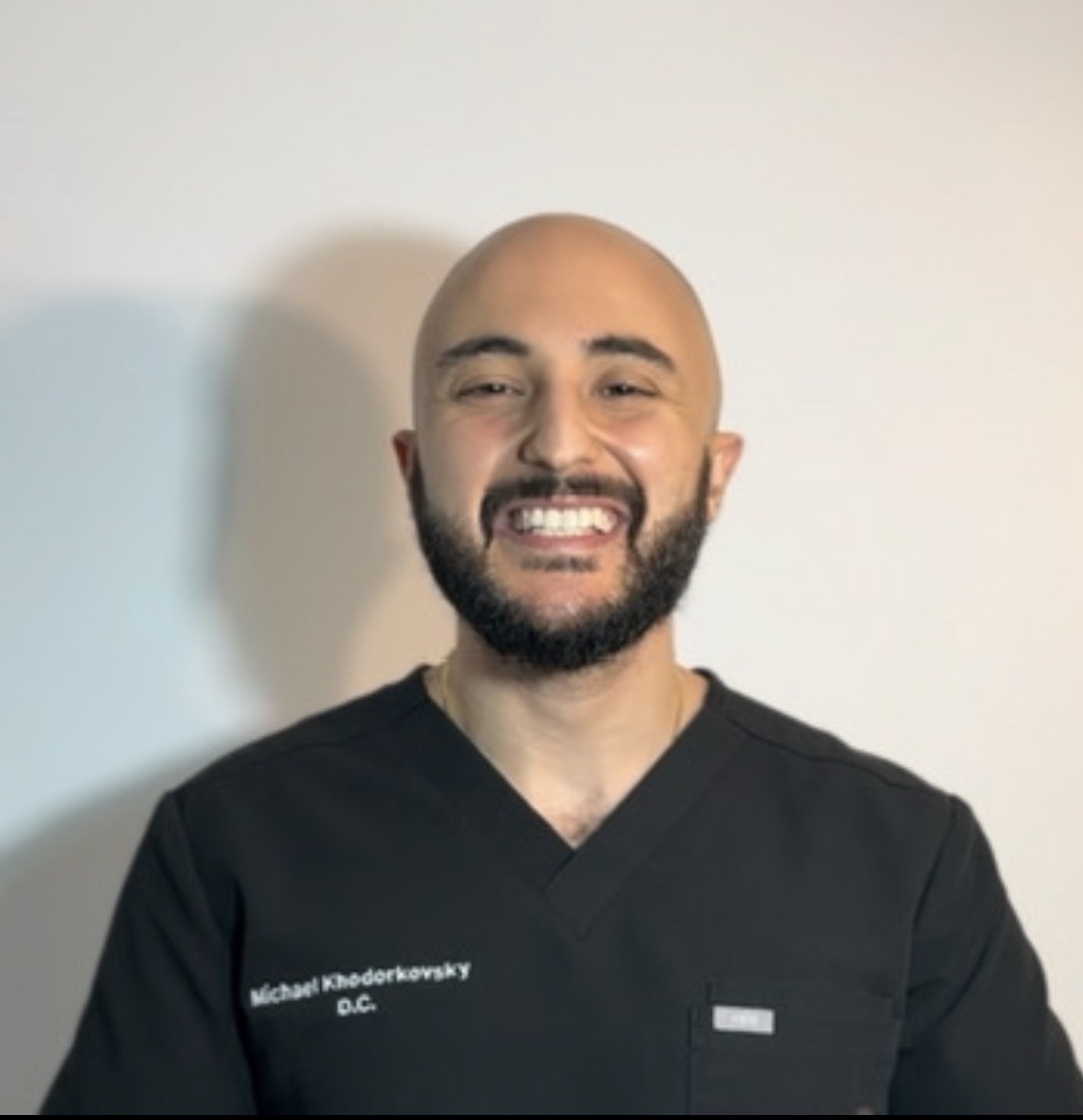
Dr. Michael Khodorkovsky, DC
Doctor of Chiropractic · MK Chiropractic & Wellness · DUMBO, Brooklyn
Dr. Mike is a Brooklyn-based chiropractor and former NCAA competitive athlete. He founded MK Chiropractic & Wellness to offer personalized, results-focused care in DUMBO — seeing every patient himself, every visit.
Ready to get started?
Book your first visit online or call the clinic. Insurance accepted — UHC, Aetna, Cigna, ASH.