Herniated Disc Relief Brooklyn
Book your first visit at MK Chiropractic in DUMBO, Brooklyn. Same-day available.
What a herniated disc is (and what it isn’t)
A “herniated disc” means the soft inner portion of a spinal disc has pushed outward and is irritating nearby tissue—often a spinal nerve. In the low back, this commonly creates sciatica: pain traveling from the buttock down the leg, sometimes with tingling, numbness, or weakness. In the neck, it can radiate into the shoulder, arm, or hand.
Not all disc bulges or herniations are an emergency—and not every MRI finding is the reason you hurt. In Brooklyn and NYC, I frequently see people with intense symptoms after a specific trigger (lifting, moving apartments, deadlifts, long sitting, or a sudden twist), while others have gradual onset from repetitive strain. The goal is to match your symptoms and exam findings to the right treatment plan rather than treating an MRI report alone.
Most people improve with conservative care when the plan is specific, progressive, and guided by clinical signs. The key is identifying whether your symptoms are mechanical (movement and posture driven), inflammatory (irritable nerve), or related to instability/guarding, then choosing the safest methods to calm pain and restore function.
- Low back herniation: back pain with sciatica, worse with sitting, bending, coughing/sneezing
- Neck herniation: neck pain with arm symptoms, worse with certain head positions or prolonged screens
- Nerve irritation signs: tingling, numbness, burning, or “electric” pain
- Strength changes: foot drop, grip weakness, or difficulty with stairs can be red flags
- Disc pain can mimic hip/SI joint issues—an exam helps clarify the source
How chiropractic care can help a herniated disc
Chiropractic care for a herniated disc is not about “pushing the disc back in.” It’s about reducing mechanical stress on the irritated segment, improving motion where you’re stiff, and decreasing nerve sensitivity so you can move with less pain. When appropriate, specific spinal adjustments, mobilization, and decompression-style techniques can reduce pressure and improve how the joints and surrounding tissues move.
At MK Chiropractic & Wellness, my approach is guided by your symptoms and neurologic exam. If you’re in an acute flare, we prioritize pain reduction and nerve calm-down strategies. As you stabilize, we shift to restoring mobility, rebuilding strength, and preventing recurrences—because the long-term win is getting you back to normal life in NYC: commuting, carrying groceries, sitting for work, and training without constant fear of triggering symptoms.
For many Brooklyn patients, combining manual care with targeted rehab is what makes the difference. Adjustments can help restore segmental motion; soft tissue work can reduce protective muscle spasm; and corrective exercise retrains your body to hinge, brace, and move efficiently so the disc area is less provoked.
- Precise spinal adjustments or mobilization when clinically appropriate
- Non-surgical decompression-style methods (case-dependent) to reduce nerve irritation
- Soft tissue therapy for spasm and protective tightness around the spine/hips
- Directional-preference movements (often McKenzie-based) to centralize leg/arm pain
- Core and hip stabilization to reduce repeated strain on the disc segment
- Ergonomic and activity modifications for desk work, commuting, and workouts
What to expect at your first visit: diagnosis, safety, and a clear plan
When you come in for herniated disc symptoms, we start with a detailed history and an orthopedic/neurologic exam. I’ll look at how you move, what positions aggravate or relieve symptoms, and whether there are signs of nerve root involvement—like reflex changes, sensory loss, or strength deficits. This helps determine whether you’re a good candidate for chiropractic care, which techniques are safest, and what the expected timeline should be.
If you’ve already had imaging (MRI/CT/X-ray), we review it together and connect it to your exam findings. If you haven’t had imaging, most cases don’t need it immediately. However, if you have red flags or progressive neurologic symptoms, I’ll coordinate appropriate next steps and refer you for imaging and/or specialist evaluation.
You’ll leave with a practical plan: what to do today, what to avoid temporarily, how often to start care, and which at-home movements can reduce symptoms. My goal is to give Brooklyn patients clarity—so you’re not guessing between rest, stretching, injections, or “pushing through.”
- In-person neurologic screening: strength, sensation, reflexes, and nerve tension tests
- Movement testing to identify the positions that centralize or worsen symptoms
- Technique selection based on irritability level (acute vs. subacute vs. chronic)
- A home plan you can do in a small NYC apartment (no fancy equipment needed)
- Referral guidance if symptoms suggest you need imaging, medication support, or specialist care
Recovery timeline, home care, and when you should seek urgent help
Most uncomplicated herniated disc cases improve over weeks—not days—especially when nerve symptoms are involved. Your timeline depends on irritability (how easily symptoms flare), how long you’ve had the problem, and your daily stressors (sitting time, commute, lifting demands, training volume). Early on, we often focus on reducing leg/arm pain and improving tolerance to sitting, walking, and sleeping. Then we progress toward strength, endurance, and return-to-sport or return-to-work capacity.
At home, the right amount of movement is usually better than complete rest. The wrong stretches or aggressive twisting can flare symptoms, so your home program should match your directional preference and stage of healing. I also coach patients on realistic NYC strategies: how to sit on the subway without provoking sciatica, how to carry bags evenly, and how to modify workouts without losing momentum.
Some symptoms require urgent evaluation. If you notice rapidly worsening weakness, new bowel/bladder changes, or saddle anesthesia (numbness in the groin area), that’s not a “wait and see” situation—seek emergency care. If your pain is severe and unrelenting, or you’re not improving as expected, we reassess and adjust the plan.
- Short walks often help reduce nerve sensitivity better than prolonged sitting
- Use symptom-guided pacing: small, frequent movement breaks during workdays
- Avoid repeated end-range bending/twisting early if it reproduces leg/arm symptoms
- Sleep positioning matters: side-lying with a pillow between knees often helps low back cases
- Return to lifting should be progressive: hinge mechanics, bracing, and load management
- Urgent red flags: bowel/bladder changes, saddle numbness, rapidly worsening weakness
Why choose MK Chiropractic & Wellness in DUMBO for herniated disc care
I’m Dr. Michael Khodorkovsky (Dr. Mike), and at MK Chiropractic & Wellness I focus on evidence-informed, hands-on care combined with practical rehab—because herniated disc recovery requires more than quick relief. Brooklyn patients come to my DUMBO office when they want a thoughtful diagnosis, a safe approach that respects nerve symptoms, and a plan that fits real life in NYC.
Our office is located at 81 Prospect St, Suite 504 in DUMBO, Brooklyn. If you’re dealing with back pain, sciatica, neck pain, or arm symptoms and you want to know whether chiropractic care is appropriate for your case, call (347) 313-8526. We work with many common insurance plans and networks, including UHC, Aetna, Cigna, and ASH, and we’ll help you understand your benefits and options.
My promise is straightforward: you’ll get a clear explanation of what’s happening, what we can realistically change, and what steps will move you toward lasting improvement. If your presentation suggests you need imaging or another provider on your team, I’ll tell you directly and help coordinate the next step.
- Local DUMBO Brooklyn clinic with a practical, NYC-specific approach to recovery
- Care tailored to nerve symptoms: technique selection based on safety and exam findings
- Manual therapy plus targeted exercise—built for durable results
- Insurance-friendly office (UHC, Aetna, Cigna, ASH) with clear communication
- Convenient location: 81 Prospect St, Suite 504, Brooklyn, NY
- Call MK Chiropractic & Wellness at (347) 313-8526 to schedule
Frequently Asked Questions
Can a chiropractor help a herniated disc in Brooklyn without surgery?
Often, yes. Many herniated disc cases improve with conservative care focused on reducing nerve irritation, restoring motion, and building stability. At MK Chiropractic & Wellness, I (Dr. Mike / Dr. Michael Khodorkovsky) tailor care based on your neurologic exam and symptom behavior, combining appropriate chiropractic techniques with rehab so you can return to NYC life with fewer flare-ups. If you show signs that you’re not a good candidate for conservative care, I’ll guide you toward the right next step.
Is it safe to get chiropractic adjustments with sciatica from a herniated disc?
Safety depends on the specifics of your case—how irritable the nerve is, whether you have neurologic deficits, and what movements provoke symptoms. When indicated, adjustments and mobilization can be safe and helpful, but they must be selected carefully. At MK Chiropractic & Wellness in DUMBO Brooklyn, I screen for red flags and choose techniques that match your presentation, and we pair treatment with exercises that often “centralize” leg pain and improve tolerance to sitting and walking.
When do I need an MRI for a herniated disc?
Many people don’t need an MRI immediately, especially if symptoms are improving with conservative care. Imaging is more urgent if you have progressive weakness, significant loss of sensation, bowel/bladder changes, saddle numbness, or severe symptoms that are not responding as expected. If you’re unsure, schedule an evaluation—Dr. Mike at MK Chiropractic & Wellness can perform a neurologic exam and let you know whether imaging is appropriate and help coordinate it if needed.
How many chiropractic visits does a herniated disc usually take?
It varies by severity, how long symptoms have been present, and how consistent you can be with home care and activity modifications. Some Brooklyn patients feel meaningful improvement within a few visits, while others—especially with significant sciatica or long-standing issues—may need a multi-week plan that progresses from pain control to strengthening and return-to-activity. At MK Chiropractic & Wellness, we track objective changes (pain location, function, strength, tolerance to sitting/walking) to decide whether to continue, modify, or refer.
Do you take insurance for herniated disc treatment at MK Chiropractic & Wellness?
Yes—our DUMBO Brooklyn office commonly works with insurance options including UHC, Aetna, Cigna, and ASH. Coverage and benefits vary by plan, so we’ll help you verify what applies to your care. To ask about insurance or book an appointment with Dr. Michael Khodorkovsky, call MK Chiropractic & Wellness at (347) 313-8526 or visit us at 81 Prospect St, Suite 504, Brooklyn, NY.
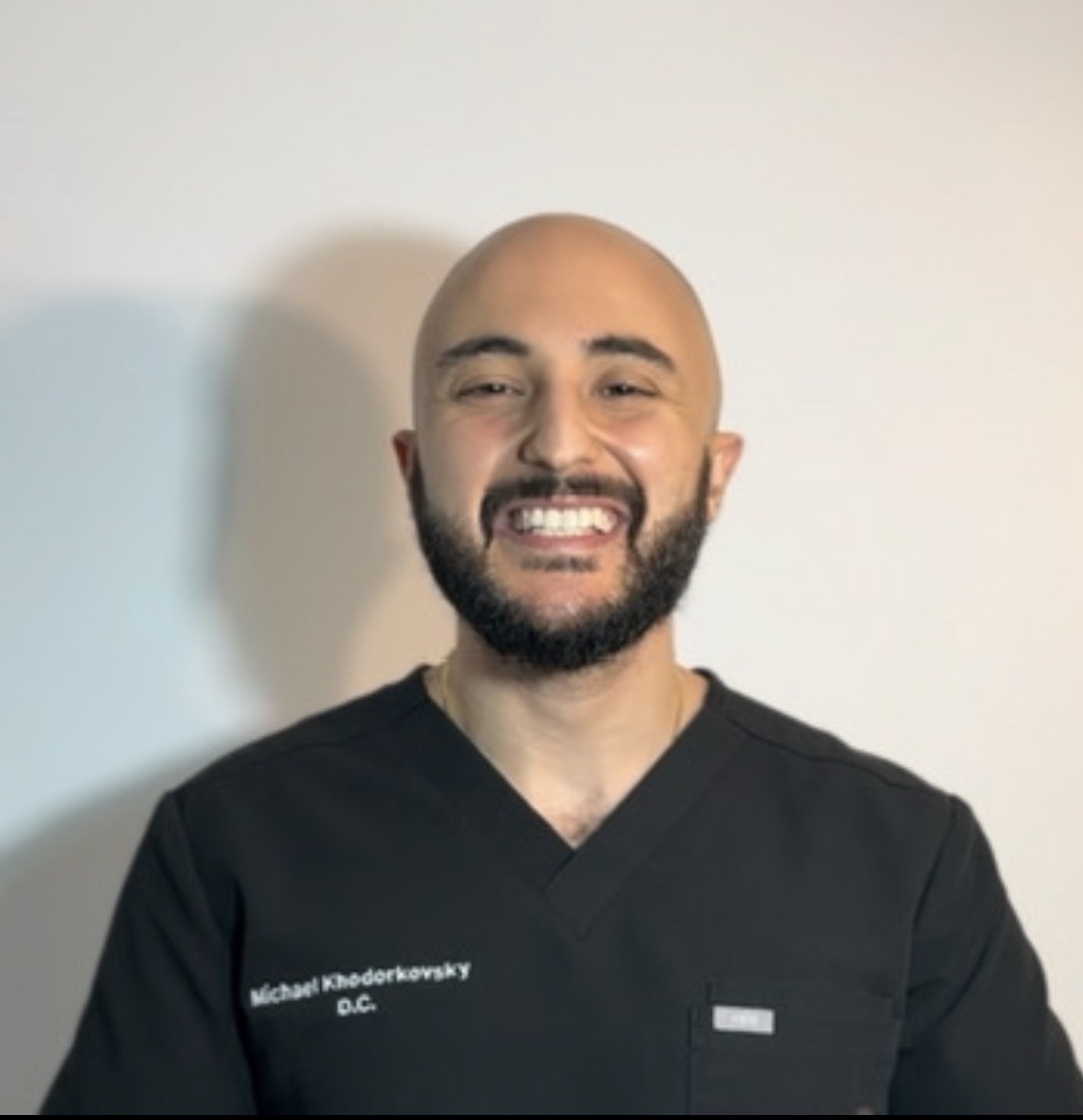
Dr. Michael Khodorkovsky, DC
Doctor of Chiropractic · MK Chiropractic & Wellness · DUMBO, Brooklyn
Dr. Mike is a Brooklyn-based chiropractor and former NCAA competitive athlete. He founded MK Chiropractic & Wellness to offer personalized, results-focused care in DUMBO — seeing every patient himself, every visit.
Ready to get started?
Book your first visit online or call the clinic. Insurance accepted — UHC, Aetna, Cigna, ASH.