Plantar Fasciitis Relief Brooklyn
Book your first visit at MK Chiropractic in DUMBO, Brooklyn. Same-day available.
Plantar fasciitis: why your heel hurts (and why it keeps coming back)
Plantar fasciitis is irritation or degeneration of the plantar fascia—a thick band of connective tissue that supports your arch and helps transfer force from your heel to your toes. Many Brooklyn patients describe it as a sharp, stabbing pain under the heel with the first steps in the morning or after sitting (the classic “first-step pain”). It often feels better once you warm up, then flares again later in the day.
In NYC, plantar fasciitis is common because we walk a lot, stand on hard surfaces, and often switch between dress shoes, sneakers, boots, and minimal footwear depending on the season. The problem usually isn’t just the plantar fascia—it’s the loads going through it: calf tightness, ankle stiffness, foot mechanics, hip control, and even how your pelvis and lower back handle impact.
At MK Chiropractic & Wellness, I look at plantar fasciitis as a whole-chain issue. If we only treat the sore spot, you may get temporary relief, but the overload pattern is still there—so it returns when you’re back on the Brooklyn Bridge, commuting, or running along the waterfront.
Common causes and risk factors I see in Brooklyn patients
Plantar fasciitis is rarely caused by one thing. It’s usually a combination of tissue capacity (how much your fascia can tolerate) and your daily demand (how much walking, standing, or training you’re asking it to do). When demand outpaces capacity, pain shows up.
In DUMBO and throughout Brooklyn, I see foot pain in runners, teachers, nurses, restaurant staff, tradespeople, and anyone who logs lots of steps. I also see flare-ups after suddenly increasing walking volume (tourist weekends, new commute, new training plan), wearing unsupportive shoes, or returning to activity after a lull.
- Calf/Achilles tightness limiting ankle dorsiflexion (your tibia can’t move forward well)
- Flat feet or high arches that change load distribution through the heel and arch
- Weak intrinsic foot muscles or poor toe control (especially a stiff big toe)
- Hip/glute weakness or poor single-leg stability increasing foot stress with every step
- Rapid increases in walking, running, or standing time on concrete
- Improper footwear for your foot type and daily demands
How chiropractic care can help plantar fasciitis and foot pain
Chiropractic care for plantar fasciitis isn’t just “cracking the foot.” The goal is to restore motion, reduce abnormal tension, calm pain, and rebuild capacity so you can tolerate walking, workouts, and work shifts again. In my office, we combine joint-specific treatment with soft tissue work and a clear rehab plan.
Depending on your exam, I may treat the ankle joint (often a major driver), the midfoot, the big toe, and the kinetic chain above it—knee, hip, pelvis, and lower back—because those regions influence stride and loading. If you’re compensating due to hip or low back stiffness, your foot often pays the price.
For many patients, the fastest progress comes from pairing hands-on care with targeted strengthening and mobility. That’s where lasting change happens—especially if you’re walking to the subway, navigating stairs daily, or trying to keep running in Prospect Park.
- Chiropractic adjustments/mobilization for the ankle, foot, and related joints to improve mechanics
- Soft tissue techniques for the plantar fascia, calf complex, and peroneals to reduce excess tension
- Guided mobility to restore ankle dorsiflexion and big-toe extension
- Progressive strengthening for the arch, calf, and hip stabilizers to increase tissue capacity
- Activity modification strategies so you don’t lose fitness while the heel calms down
- Footwear and insole guidance tailored to your walking volume and work demands
What to expect at your plantar fasciitis visit (and what you can do today)
When you come in, I start by confirming the diagnosis and screening for other causes of heel pain. Not every heel pain is plantar fasciitis—conditions like Achilles tendinopathy, nerve irritation, stress injury, or a fat-pad issue can mimic it, and treatment changes depending on the driver. We’ll review your symptom pattern, footwear, training or walking volume, and any recent changes.
Your exam typically includes checking ankle range of motion, calf length, big-toe mobility, foot posture, tenderness patterns, and how you load the foot during gait, squats, and single-leg balance. From there, we build a plan with measurable goals: less first-step pain, more walking tolerance, and improved mobility and strength.
A few high-yield steps often help immediately: avoid aggressive stretching into sharp pain, reduce long standing on hard floors for a short window if possible, and start gentle mobility and strengthening that doesn’t flare symptoms. I’ll tailor this to your schedule—because NYC life doesn’t pause for heel pain.
- Use supportive footwear for errands and at home; avoid barefoot walking on hard floors during flare-ups
- Try a short bout of calf mobility plus light foot activation before your first steps in the morning
- Temporarily reduce the activity that spikes pain (long walks/runs), then rebuild with a plan
- Ice can help pain sensitivity after activity; heat may help stiffness—use what feels better
- If pain is severe or changing (numbness, night pain, sudden swelling), get evaluated promptly
Why choose MK Chiropractic & Wellness in DUMBO for plantar fasciitis
If you’re searching for plantar fasciitis treatment in Brooklyn, my goal is simple: get you back to walking, working, and training with confidence—not just temporarily “calm the heel.” At MK Chiropractic & Wellness, I combine hands-on chiropractic care with evidence-informed rehab so you’re not stuck in a cycle of flare-ups.
I’m Dr. Michael Khodorkovsky (Dr. Mike), and I work with Brooklyn and NYC patients who are on their feet all day, commute by walking, or want to stay active without relying on rest alone. Our office is conveniently located in DUMBO Brooklyn at 81 Prospect St, Suite 504. If you’re ready to address the root causes of your foot pain, call (347) 313-8526 to schedule.
We also try to make care practical and accessible. MK Chiropractic & Wellness works with many insurance plans, including UHC, Aetna, Cigna, and ASH—so you can focus on getting better, not just managing symptoms.
Frequently Asked Questions
Can a chiropractor help plantar fasciitis in Brooklyn?
Yes. At MK Chiropractic & Wellness in DUMBO, I (Dr. Mike / Dr. Michael Khodorkovsky) treat plantar fasciitis by improving foot and ankle mechanics, reducing soft-tissue tension, and building strength and mobility so your plantar fascia isn’t overloaded with every step. The goal is lasting improvement, not just short-term relief.
How many visits does plantar fasciitis usually take to improve?
It depends on how long you’ve had symptoms, your walking/standing demands in NYC, and whether there are contributing factors like calf tightness or ankle stiffness. Many patients notice changes in first-step pain and walking tolerance within a few visits when we pair treatment with the right home plan. More persistent or chronic cases often require a longer, progressive strengthening phase for durable results.
Do I need imaging like an X-ray or MRI for heel pain?
Not always. Plantar fasciitis is commonly diagnosed clinically with history and exam. If your symptoms don’t match the typical pattern, if there was a sudden injury, or if there are red flags (significant swelling, night pain, numbness, or inability to bear weight), I may recommend imaging or referral. I’ll guide you based on your presentation at MK Chiropractic & Wellness.
Should I stretch my plantar fascia and calf, or can that make it worse?
The right kind of stretching can help, but aggressive stretching into sharp heel pain can irritate the tissue—especially early on. I typically prioritize restoring ankle mobility safely, reducing calf tension, and adding strength to the foot and calf. During your visit, I’ll show you exactly what to do (and what to avoid) based on your irritability level.
Do you accept insurance for plantar fasciitis care in DUMBO?
MK Chiropractic & Wellness works with many insurance plans, including UHC, Aetna, Cigna, and ASH. If you’re coming in for plantar fasciitis or foot pain in Brooklyn, call our office at (347) 313-8526 and we’ll help you verify benefits and understand your coverage before you start care. We’re located at 81 Prospect St, Suite 504 in DUMBO Brooklyn.
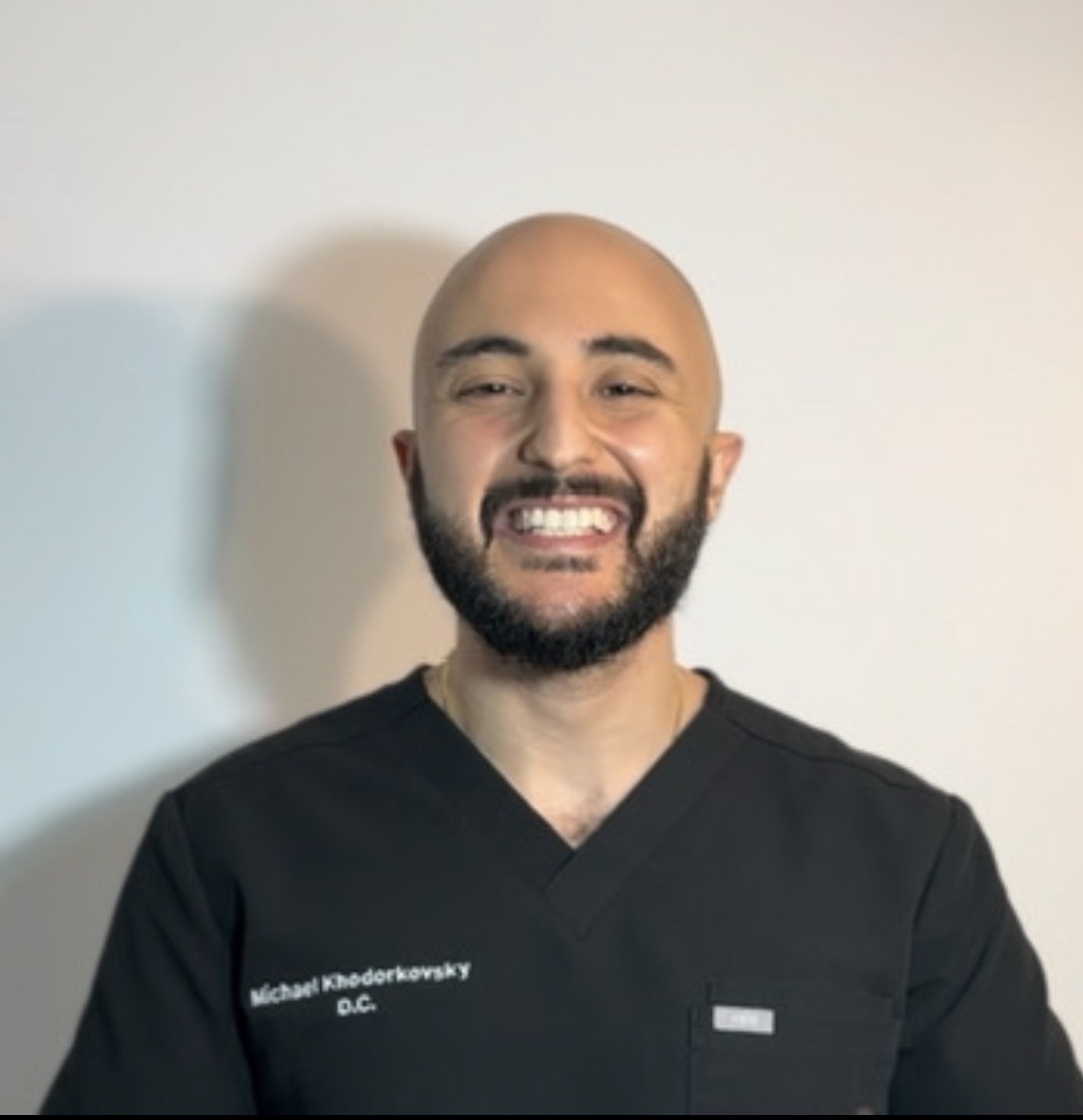
Dr. Michael Khodorkovsky, DC
Doctor of Chiropractic · MK Chiropractic & Wellness · DUMBO, Brooklyn
Dr. Mike is a Brooklyn-based chiropractor and former NCAA competitive athlete. He founded MK Chiropractic & Wellness to offer personalized, results-focused care in DUMBO — seeing every patient himself, every visit.
Ready to get started?
Book your first visit online or call the clinic. Insurance accepted — UHC, Aetna, Cigna, ASH.