Running Pain Relief in Brooklyn
Book your first visit at MK Chiropractic in DUMBO, Brooklyn. Same-day available.
Why runners get IT band pain and shin splints in NYC
Brooklyn runners deal with unique stressors: uneven sidewalks, bridge inclines, stop-and-go street crossings, and quick mileage jumps when the weather finally cooperates. Those factors can expose small movement faults that don’t show up in the gym, especially at the hip, knee, ankle, and foot.
IT band pain (often felt on the outside of the knee or hip) is usually a load-management and mechanics problem—not simply an “IT band is tight” problem. Shin splints (medial tibial stress syndrome) tend to flare when the lower leg is absorbing more force than it can adapt to, often tied to foot/ankle mobility limits, calf strength/endurance deficits, and training errors.
The goal of care is to calm the irritated tissues, restore joint motion where you’re restricted, strengthen what’s underperforming, and correct the running-related habits that keep the injury cycling back—so you can keep training, not just rest and hope.
Common symptoms: what’s normal soreness vs an injury
A little post-run soreness that improves within 24–48 hours is typically normal adaptation. Pain that changes your stride, lingers, or ramps up each week is a signal that your body’s current capacity and your training load are mismatched.
For IT band-related pain, many runners notice discomfort after a certain distance, especially on downhills or cambered surfaces. With shin splints, pain is often along the inner border of the shin and can start as “warm-up pain” that eventually becomes constant or sharp.
- IT band pain signs: outer knee pain, pain with stairs/downhills, tenderness near the lateral knee, hip tightness/weakness feeling
- Shin splints signs: aching along inner shin, pain early in a run that returns after, tenderness over a broader area (not a pinpoint spot)
- Red flags to get evaluated promptly: pain at rest/night, swelling that doesn’t settle, numbness/tingling, sudden “pop,” or inability to bear weight
- Potential look-alikes we screen for: stress fracture, exertional compartment syndrome, patellofemoral pain, tendinopathy (peroneal, posterior tibial, Achilles)
- If you’re changing your stride to “protect it,” it’s time for an exam—compensation often creates a second problem (hip, knee, foot, or low back)
How I evaluate running injuries in my DUMBO office
When you come in, I’m looking for the true driver of the pain, not just the painful spot. I take a focused history (training volume, shoes, surfaces, recent changes, prior injuries), then examine joint mobility, tissue sensitivity, strength/endurance, and control through the hip-knee-ankle-foot chain.
For many runners, the issue is a combination of: limited ankle dorsiflexion, hip abductor weakness, poor single-leg control, and a pelvis/spine that isn’t moving well under load. We’ll often use simple movement tests (single-leg squat, step-down, hopping tolerance) and, when helpful, a running or gait screen.
This approach helps us tailor treatment to your training goals—whether that’s pain-free commuting runs along the waterfront, a Brooklyn Half build, or returning to speed work safely.
- Training review: weekly mileage, intensity, hills, speed sessions, recent spikes, recovery days
- Footwear/surface check: shoe age, stability needs, bridge/sidewalk camber, treadmill vs outdoor balance
- Mobility testing: ankle dorsiflexion, hip rotation, thoracic spine/pelvic motion
- Strength/endurance: calves/soleus, tibialis posterior/anterior, glute med/max, core endurance
- Load tolerance: step-down, single-leg hop readiness, pain behavior with impact vs compressive load
- Differential screening: ruling out stress fracture patterns and other conditions requiring imaging or referral
Chiropractic treatment + sports rehab for IT band and shin splints
At MK Chiropractic & Wellness, treatment for runners is hands-on and movement-based. I use chiropractic adjustments when they’re indicated to restore motion and reduce joint-related irritation—commonly in the lumbar spine, pelvis, hip, knee, ankle, and foot. This isn’t about “cracking everything”; it’s about improving how you load and move.
We pair manual therapy with rehab that fits your schedule and your running plan. For IT band pain, we often focus on hip control, lateral chain capacity, and running form factors like overstriding and cadence. For shin splints, the plan usually includes calf/soleus endurance, foot intrinsic strength, ankle mobility, and graded impact exposure.
You’ll also get practical guidance: how to modify your runs without losing fitness, when to swap in cycling/elliptical, and how to return to hills and speed work without flaring symptoms.
- Chiropractic adjustments to improve joint mechanics and reduce compensatory overload
- Soft tissue work for overworked structures (calves, lateral hip, TFL, peroneals) when appropriate
- Progressive strengthening: glutes/hip abductors, calves/soleus, tibialis posterior, foot intrinsics
- Mobility drills: ankle dorsiflexion, hip rotation, thoracic mobility to improve stride mechanics
- Load management plan: mileage/intensity adjustments, run-walk strategies, return-to-run progression
- Running-specific coaching: cadence targets, hill strategy, and form cues to reduce recurrence
Why choose MK Chiropractic & Wellness in DUMBO for running injuries
I’m Dr. Michael Khodorkovsky (most patients call me Dr. Mike), and I treat Brooklyn runners every week with IT band pain, shin splints, knee pain, ankle issues, and “mystery” aches that show up only when the miles add up. My focus is not just pain relief—it’s getting you back to consistent training with fewer flare-ups and a clear plan you can follow.
MK Chiropractic & Wellness is located in DUMBO, Brooklyn at 81 Prospect St, Suite 504. If you’re dealing with pain that’s limiting your runs, call (347) 313-8526 to schedule an evaluation. We work with many common insurance plans, including UHC, Aetna, Cigna, and ASH, and we’ll help you understand your benefits and options.
If you’re not sure whether your symptoms are “just tightness” or something that needs attention, let’s assess it properly. The sooner we identify the driver—training error, mechanics, mobility restriction, strength deficit, or a combination—the faster we can build a path back to running in Brooklyn without constant setbacks.
Frequently Asked Questions
Can a chiropractor help with IT band syndrome from running?
Yes. At MK Chiropractic & Wellness, I (Dr. Mike / Dr. Michael Khodorkovsky) focus on why your IT band region is getting overloaded—often hip control, pelvic mechanics, ankle mobility, and training structure. Chiropractic adjustments can help restore motion in the spine/pelvis/hip/ankle when restrictions are contributing, but the long-term fix typically includes targeted strengthening and a return-to-run plan so the pain doesn’t keep coming back.
How do I know if my shin splints are actually a stress fracture?
Shin splints usually create a broader, more diffuse tenderness along the inner shin and may feel better after warming up early on. Stress fractures tend to be more pinpoint, sharper, and can hurt at rest or with hopping. Because the symptoms can overlap, I screen for stress-fracture patterns during your exam in DUMBO. If your history and findings suggest a stress injury, I’ll recommend the appropriate next steps, which may include imaging or referral.
Should I stop running completely with IT band pain or shin splints?
Not always. Many Brooklyn runners can keep some level of running with smart modifications—shorter distance, flatter routes (avoid bridges/hills temporarily), reduced intensity, or run-walk intervals—while we treat the underlying cause. In my office, we set clear guidelines for what pain levels are acceptable, how symptoms should behave during and after runs, and when to progress or pull back.
How many visits does it usually take to feel better?
It depends on how long the issue has been present, how irritable the tissue is, and whether training load can be adjusted. Some runners feel meaningful improvement within a few visits, but lasting results typically come from combining hands-on care with a progressive rehab plan and better load management over several weeks. During your first visit at MK Chiropractic & Wellness, I’ll outline a realistic timeline based on your exam and your running goals.
Do you take insurance for running injury treatment in Brooklyn?
Yes. MK Chiropractic & Wellness in DUMBO (81 Prospect St, Suite 504) works with many insurance plans, including UHC, Aetna, Cigna, and ASH. Benefits can vary by plan, so call (347) 313-8526 and we’ll help you verify coverage and understand your options for chiropractic and rehab-based care.
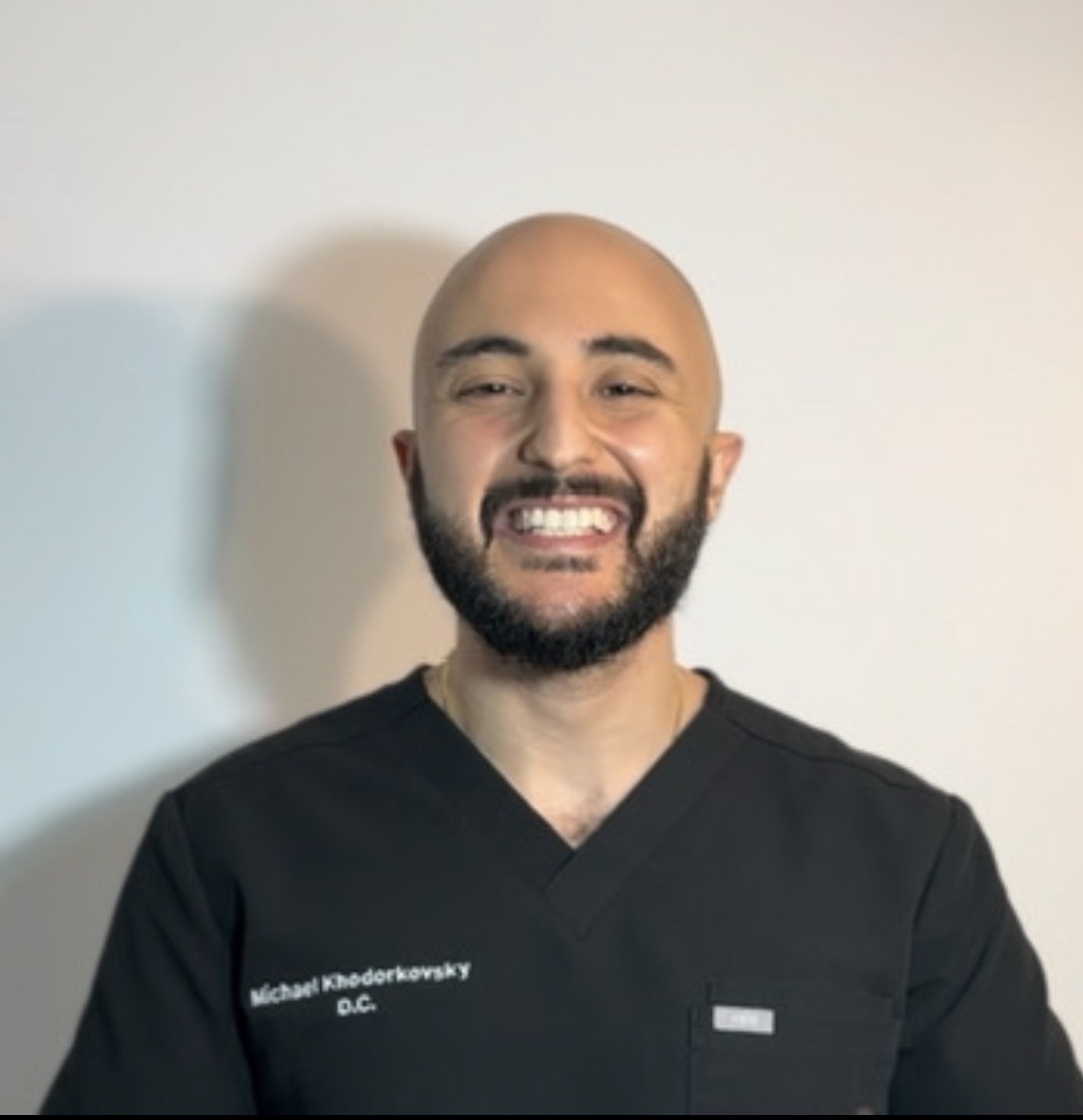
Dr. Michael Khodorkovsky, DC
Doctor of Chiropractic · MK Chiropractic & Wellness · DUMBO, Brooklyn
Dr. Mike is a Brooklyn-based chiropractor and former NCAA competitive athlete. He founded MK Chiropractic & Wellness to offer personalized, results-focused care in DUMBO — seeing every patient himself, every visit.
Ready to get started?
Book your first visit online or call the clinic. Insurance accepted — UHC, Aetna, Cigna, ASH.