Scoliosis Care in Brooklyn
Book your first visit at MK Chiropractic in DUMBO, Brooklyn. Same-day available.
Scoliosis in Brooklyn: what it is and what patients actually feel
Scoliosis is a three-dimensional spinal curvature that can involve side-bending plus rotation of the spine and rib cage. Many people in Brooklyn discover it as teens (adolescent idiopathic scoliosis), while others notice symptoms later in life from degenerative changes, old injuries, or years of asymmetric loading (think: laptop work, carrying bags, or repetitive training).
In my DUMBO practice, the most common reasons adults with scoliosis seek care are not “to straighten the spine overnight,” but to improve comfort, mobility, posture control, and confidence with movement. You might notice one shoulder higher than the other, a rib “hump,” a hip hike, uneven pant legs, tightness on one side of the low back, or fatigue after walking across the Brooklyn Bridge or standing in line on a busy day.
Scoliosis severity is often described by Cobb angle on X-ray, but your quality of life is also influenced by stiffness, muscle imbalance, core endurance, breathing mechanics, and how well your nervous system and joints tolerate daily stress. That’s where targeted conservative care—including chiropractic—can be valuable.
- Common adult symptoms: one-sided back pain, tightness, spasms, fatigue with standing or walking
- Postural signs: uneven shoulders, rib prominence, uneven waistline, hip shift
- Functional issues: reduced rotation, difficulty with prolonged sitting (WFH), discomfort with lifting or workouts
- Red flags to get evaluated promptly: progressive weakness, numbness that’s worsening, bowel/bladder changes, significant night pain
How chiropractic care helps manage scoliosis (and what it can’t do)
Chiropractic care for scoliosis is best understood as scoliosis management—supporting the joints, muscles, and nervous system so you move better and hurt less. In adults especially, the goal is often to improve spinal mechanics, reduce painful joint irritation, decrease muscle guarding, and build stability so your curve is less “symptomatic,” even if the structural curve itself remains.
In my experience, the most meaningful improvements come from combining hands-on care with specific corrective exercises and lifestyle strategies. Adjustments can help restore motion in restricted segments above and below the curve, while soft tissue work and rehab address the muscle imbalance and motor control changes that commonly accompany scoliosis.
What chiropractic care generally can’t promise is a permanent structural correction of a significant curve in a fully grown adult. However, it can often help reduce pain, improve breathing and rib mobility, enhance posture awareness, and help you feel safer and stronger in your body—especially when the plan is consistent and measurable.
- Targets pain drivers: joint restriction, facet irritation, muscle trigger points, compensation patterns
- Improves mobility where you’re stiff (often thoracic rotation and rib mechanics)
- Builds stability where you’re hypermobile or overloaded (core, hips, scapular control)
- Supports better posture endurance for desk work, commuting, and standing
- Pairs well with medical management and physical therapy when coordinated appropriately
What a scoliosis visit looks like at MK Chiropractic & Wellness
A scoliosis-focused evaluation starts with your story: where you feel symptoms, what activities flare things up (sitting, lifting, walking, training), and what you’ve tried. Then we assess posture, gait, spinal and hip range of motion, breathing mechanics, strength/endurance, and neurologic function. If you have prior imaging (X-rays, MRI), bring it—understanding the curve pattern helps guide a safer, more precise approach.
When clinically appropriate, care may include gentle, specific chiropractic adjustments, mobilization, soft tissue work, and corrective exercise. For some patients, we emphasize thoracic mobility and rib expansion; for others, it’s lumbar stability and hip mechanics; for many, it’s a blend. The plan is tailored to your curve type, your age, and your goals—whether that’s getting through a workday without pain, returning to running in Prospect Park, or training safely in the gym.
Progress is tracked with objective measures: pain scores, range of motion, endurance (how long you can sit/stand), breathing capacity, and function (like carrying groceries, commuting, or sleeping comfortably). The idea is simple: clear milestones, fewer flare-ups, and better long-term self-management.
- Posture and movement assessment (including shoulder/hip asymmetry and rotation)
- Neurologic screening (strength, reflexes, sensation) when indicated
- Hands-on care: adjustments/mobilization plus soft tissue techniques
- Home plan: scoliosis-specific mobility, stability, and breathing drills
- Ergonomic and lifestyle coaching for NYC work and commuting demands
Home strategies that matter in NYC: posture, exercise, and flare-up control
Scoliosis responds best when clinic care is paired with consistent home work. The goal is not perfect posture 24/7 (nobody has that in NYC), but better options: knowing how to decompress your spine after sitting, how to breathe into restricted ribs, and how to strengthen the muscles that keep your curve from feeling “tired and cranky.”
For many Brooklyn patients, the biggest triggers are long sitting hours, phone posture, and asymmetric loading—carrying tote bags, backpacks, or a child on one hip. Small changes add up: switching sides, using a supportive setup, taking movement breaks, and training the core/hips/scapulae intelligently.
If you’re dealing with adult degenerative scoliosis, flare-ups can happen. I teach patients a simple flare-up plan—what movements to avoid temporarily, what gentle mobility to use, and when to come in for a check so a minor irritation doesn’t snowball into a week-long setback.
- Alternate carrying sides; consider a backpack with two straps for heavier loads
- Use micro-breaks: 60–90 seconds of movement every 30–45 minutes of sitting
- Prioritize thoracic mobility and rib expansion if you feel “stuck” in the mid-back
- Train stability: anti-rotation core work, hip strength, and scapular control
- Sleep support: pillow positioning to reduce twisting and morning stiffness
- Know when to escalate: persistent leg symptoms, progressive weakness, or worsening numbness should be evaluated
Why choose MK Chiropractic & Wellness in DUMBO for scoliosis care
At MK Chiropractic & Wellness, I focus on evidence-informed scoliosis management that respects your anatomy and your goals. You’ll get a clear assessment, a plan that blends hands-on care with practical rehab, and straightforward guidance you can actually use in your day-to-day life in Brooklyn and NYC.
My office is conveniently located in DUMBO at 81 Prospect St, Suite 504, Brooklyn, NY. If you’re searching for scoliosis support that is personalized—not cookie-cutter—and you want a clinician who takes the time to explain what’s happening and why, I’d be glad to help.
For scheduling, call (347) 313-8526. We work with many insurance plans and networks, including UHC, Aetna, Cigna, and ASH, and my team can help you understand your benefits before you start care.
- Care led by Dr. Michael Khodorkovsky (Dr. Mike) with a scoliosis-management focus
- Combination approach: chiropractic, mobility work, and targeted strengthening
- Progress tracking with functional, real-life goals (work, commuting, training, sleep)
- Convenient DUMBO location: 81 Prospect St, Suite 504, Brooklyn, NY
- Insurance support: UHC, Aetna, Cigna, ASH (coverage varies by plan)
Frequently Asked Questions
Can a chiropractor fix scoliosis or straighten my spine?
Scoliosis care is usually best framed as management, not a guaranteed “fix.” In growing teens, curve progression is monitored closely and may involve bracing or orthopedic care. In adults, structural curves are often stable but can become painful or stiff due to joint irritation and muscle imbalance. At MK Chiropractic & Wellness, Dr. Mike (Dr. Michael Khodorkovsky) focuses on improving mobility, reducing pain, enhancing posture control, and building strength so your curve is less symptomatic and your daily function improves.
Is chiropractic care safe if I have scoliosis?
In many cases, yes—when the care is individualized and based on a thorough exam. Scoliosis creates areas that are stiff and areas that compensate or become overloaded, so technique selection matters. Dr. Mike tailors adjustments, mobilization, and soft tissue work to your curve pattern, symptoms, and tolerance. If imaging or a referral is warranted (for example, significant neurologic symptoms), MK Chiropractic will guide you to the appropriate next step.
Do I need X-rays before starting scoliosis treatment?
Not always, but prior X-rays can be very helpful for understanding curve type and severity (Cobb angle), especially if you’ve been diagnosed before. If you already have imaging, bring it to your visit in DUMBO. If you don’t, Dr. Mike will determine based on your history and exam whether imaging is necessary or whether we can begin conservatively with safe, symptom-guided care and objective functional measures.
How many visits will I need for scoliosis management?
It depends on your goals and whether you’re in an acute flare-up or working on longer-term stability. Many Brooklyn/NYC patients start with a short phase focused on pain relief and mobility, then transition into strengthening and self-management with less frequent visits. At MK Chiropractic & Wellness, Dr. Mike outlines a plan with milestones (sitting tolerance, walking tolerance, sleep, training) so you know what we’re working toward and how we’ll measure progress.
Does MK Chiropractic & Wellness in Brooklyn take insurance for scoliosis care?
We work with many common plans and networks, including UHC, Aetna, Cigna, and ASH (coverage and benefits vary by plan). If you’re unsure about chiropractic benefits for scoliosis-related pain or mobility issues, call MK Chiropractic & Wellness at (347) 313-8526 and our team can help verify your benefits. Our office is located at 81 Prospect St, Suite 504, DUMBO Brooklyn, NY.
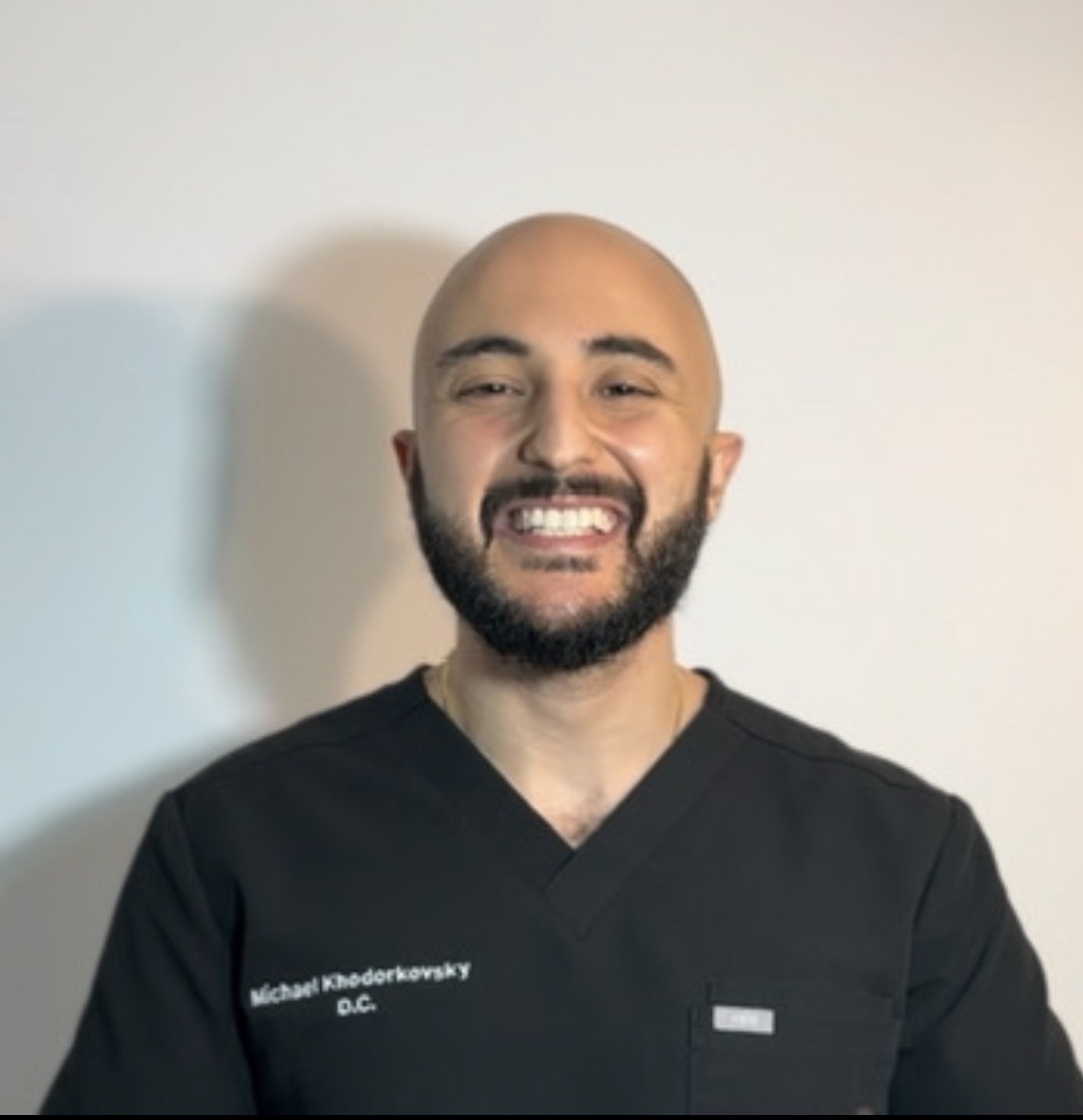
Dr. Michael Khodorkovsky, DC
Doctor of Chiropractic · MK Chiropractic & Wellness · DUMBO, Brooklyn
Dr. Mike is a Brooklyn-based chiropractor and former NCAA competitive athlete. He founded MK Chiropractic & Wellness to offer personalized, results-focused care in DUMBO — seeing every patient himself, every visit.
Ready to get started?
Book your first visit online or call the clinic. Insurance accepted — UHC, Aetna, Cigna, ASH.