Herniated Disc Relief Brooklyn
Book your first visit at MK Chiropractic in DUMBO, Brooklyn. Same-day available.
Disc herniation pain in NYC: what’s really happening
If you’ve been told you have a “herniated disc,” it usually means the disc (the cushion between spinal bones) is bulging or leaking beyond its normal boundary. That change can inflame nearby tissues and, in many cases, irritate a spinal nerve—creating the classic pattern of pain that travels into the buttock, hip, or down the leg (sciatica) or into the shoulder/arm in the neck.
In Brooklyn, I see a lot of disc flare-ups tied to long hours sitting, lifting and carrying (kids, groceries, gym bags), desk work, rideshare commuting, and training volume that outpaces recovery. The goal of care is not just to “feel better today,” but to lower nerve irritation, improve spinal movement, and help you get back to walking, working, and exercising without constantly provoking symptoms.
- Common symptoms: sharp low back or neck pain, radiating leg/arm pain, numbness/tingling, weakness, pain with coughing/sneezing
- Typical triggers: prolonged sitting, bending/twisting, lifting, sudden increase in training, poor sleep and recovery
- Red flags (urgent evaluation): progressive weakness, loss of bowel/bladder control, saddle numbness, severe unrelenting pain with fever or unexplained weight loss
- Good news: many disc cases improve with conservative care when the plan is specific and progressive
How spinal decompression therapy can help a herniated disc
Spinal decompression therapy is a form of traction-based treatment designed to reduce compressive forces on spinal segments. When applied appropriately, it can help decrease pressure within the disc and reduce mechanical stress on sensitive structures around the nerve. In practical terms, the goal is to create a more favorable environment for the disc and irritated nerve to calm down—so you can move better and rehab effectively.
At MK Chiropractic & Wellness, I consider decompression one tool in a broader plan. It’s not a magic button, and it’s not the right fit for every person. But when the exam findings match—disc-related pain, radicular symptoms, compression intolerance, and imaging history when available—decompression can be a valuable part of a non-surgical approach.
- May reduce nerve root irritation by lowering local mechanical stress
- Often helps patients who feel worse with sitting or bending and better with walking/standing
- Can complement chiropractic adjustments, mobility work, and strength-based rehab
- Typically feels like a gentle pulling/relaxing cycle rather than aggressive stretching
- Best outcomes usually come from combining decompression with guided exercise and ergonomics
What to expect at your decompression visit in DUMBO
First, we start with a thorough history and exam: where the pain travels, what movements provoke it, your strength/reflex/sensation findings, and how your spine tolerates loading. If you have prior imaging (MRI/CT/X-ray), bring it—helpful, but not always required to start. My job is to identify whether your presentation is most consistent with disc herniation, joint irritation, stenosis-like compression, muscular referral, or a combination.
If decompression is appropriate, we tailor positioning and dosage to your tolerance. Early on, the priority is symptom reduction and nerve calming, not pushing intensity. As symptoms stabilize, we progress into a plan that rebuilds capacity—so you’re not stuck in a cycle of recurring flare-ups every time you pick something up, take the subway stairs, or sit through a workday.
- Visit length: typically 30–45 minutes depending on what’s included that day
- Common add-ons: targeted chiropractic adjustments, soft tissue work, nerve mobility, core/hip stability training
- Home plan: walking doses, posture/sitting strategies, and a few specific movements to reduce sensitivity
- Frequency: often higher early (e.g., 2–3x/week) then taper as function improves
- Re-evaluation checkpoints: symptom location/intensity, neurologic signs, activity tolerance, and functional goals
Who is (and isn’t) a good candidate for spinal decompression
The best candidates tend to have disc-related patterns—pain that centralizes (moves out of the leg/arm and back toward the spine) with the right movements, symptoms worsened by compression (sitting, bending), and findings suggesting nerve irritation without dangerous instability. Many Brooklyn patients come in trying to avoid injections or surgery; decompression can be a reasonable conservative step when used appropriately and monitored closely.
That said, decompression isn’t for everyone. Certain conditions require modification, a different approach, or medical co-management. If you’re not a candidate, I’ll tell you plainly and help direct you toward the safest next step.
- Often a good fit: lumbar disc herniation with sciatica, cervical disc irritation with arm symptoms, recurrent disc flare-ups tied to sitting/bending
- May need modifications: older disc degeneration, hypersensitivity/acute spasm, significant fear-avoidance, pregnancy (case-by-case and usually different approach)
- Not appropriate without clearance: fracture, active infection, certain tumors, severe osteoporosis, uncontrolled inflammatory conditions
- Immediate medical referral: progressive neurologic deficits, bowel/bladder changes, or other red-flag symptoms
Why Brooklyn patients choose MK Chiropractic & Wellness in DUMBO
I’m Dr. Michael Khodorkovsky (Dr. Mike), and at MK Chiropractic & Wellness we focus on getting you a clear diagnosis, a plan that matches your goals, and measurable progress—especially for disc herniation pain that disrupts work, commuting, and training. Our DUMBO Brooklyn location is convenient for local residents and nearby neighborhoods, and we take the time to explain what’s happening and what to do next.
If you’re dealing with disc herniation pain and want a conservative, evidence-informed approach that can include spinal decompression, chiropractic care, and rehab, I’d be glad to help. You can find us at 81 Prospect St, Suite 504, Brooklyn, NY, and reach the office at (347) 313-8526. We work with many insurance plans, including UHC, Aetna, Cigna, and ASH—our team can verify benefits and walk you through your options.
- Local, hands-on care in DUMBO Brooklyn with a clear plan and re-evaluations
- Conservative, non-surgical focus for disc and nerve-related pain
- Treatment that blends decompression (when appropriate) with rehab and movement education
- Insurance-friendly office: UHC, Aetna, Cigna, and ASH (benefits verified before starting when possible)
- Easy next step: call (347) 313-8526 to schedule and discuss whether decompression fits your case
Frequently Asked Questions
How many spinal decompression sessions do I need for a herniated disc?
It depends on how irritable the nerve is, how long symptoms have been present, and how your body responds in the first couple of weeks. Many patients at MK Chiropractic & Wellness start with a short trial period and we track changes in leg/arm symptoms, mobility, and daily tolerance (sitting, walking, stairs). Some cases improve in a few weeks; others need a longer plan—especially if symptoms are chronic or there are recurrent flare-ups. Dr. Mike will outline an initial schedule and adjust based on objective progress.
Is spinal decompression therapy safe, and what does it feel like?
For appropriate candidates, decompression is generally well-tolerated and feels like a gentle, rhythmic pulling and relaxation rather than a forceful stretch. At MK Chiropractic & Wellness in DUMBO Brooklyn, Dr. Michael Khodorkovsky tailors the positioning and intensity to your symptoms so we’re not aggravating the nerve. You should expect to feel supported and comfortable; if anything feels sharp, electric, or worsening, we adjust immediately.
Can spinal decompression prevent surgery for a disc herniation?
In many cases, conservative care can reduce symptoms enough that surgery isn’t needed, especially when there’s no progressive neurologic loss. Decompression can be part of that conservative plan by reducing mechanical stress and helping calm nerve irritation—paired with rehab to restore strength and movement. That said, no treatment can guarantee you’ll avoid surgery. If your exam suggests significant or worsening weakness, or red-flag symptoms, Dr. Mike will refer you for the appropriate medical evaluation.
Do you accept insurance for decompression and herniated disc treatment in Brooklyn?
MK Chiropractic & Wellness works with many insurance plans, including UHC, Aetna, Cigna, and ASH. Coverage can vary by plan and by the specific services included in your visit. Our office can help verify benefits and explain what’s covered before you begin care, so you can make an informed decision.
How do I know if my pain is a herniated disc or something else?
Radiating pain, numbness/tingling, and weakness can point toward disc-related nerve irritation, but similar symptoms can also come from joint inflammation, stenosis-type narrowing, hip issues, or muscular referral patterns. The most reliable way to sort it out is a focused history and neurologic and orthopedic exam. At MK Chiropractic & Wellness (81 Prospect St, Suite 504, DUMBO Brooklyn), Dr. Michael Khodorkovsky will assess your movement patterns, nerve function, and symptom behavior, review any prior imaging, and then recommend the most appropriate plan—decompression only if it truly matches your presentation. To book, call (347) 313-8526.
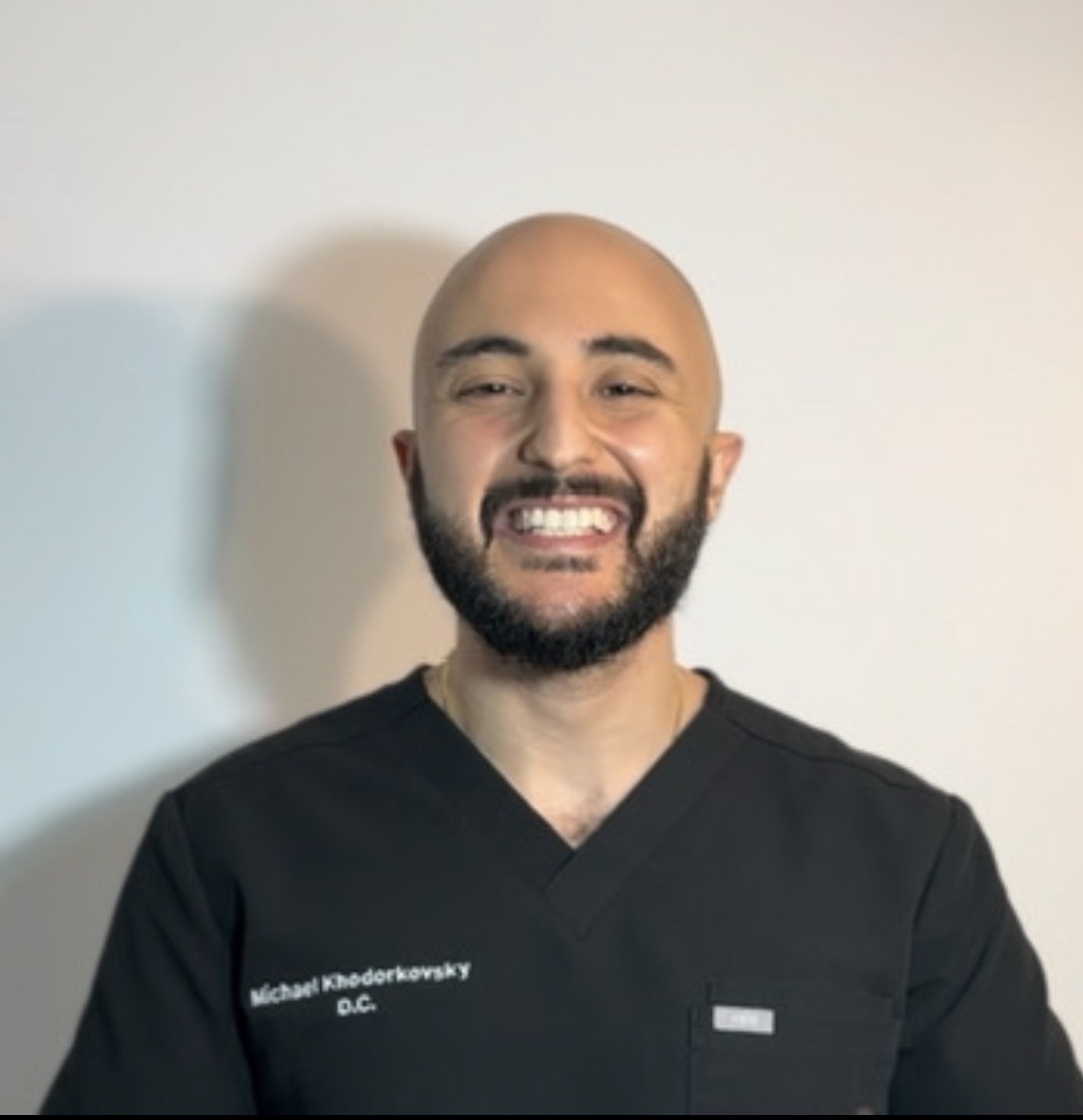
Dr. Michael Khodorkovsky, DC
Doctor of Chiropractic · MK Chiropractic & Wellness · DUMBO, Brooklyn
Dr. Mike is a Brooklyn-based chiropractor and former NCAA competitive athlete. He founded MK Chiropractic & Wellness to offer personalized, results-focused care in DUMBO — seeing every patient himself, every visit.
Ready to get started?
Book your first visit online or call the clinic. Insurance accepted — UHC, Aetna, Cigna, ASH.