TMJ Relief in Brooklyn
Book your first visit at MK Chiropractic in DUMBO, Brooklyn. Same-day available.
TMJ jaw pain: what it is and why it happens in NYC
TMJ refers to your temporomandibular joints—one on each side of your jaw—plus the muscles and nerves that control chewing, speaking, swallowing, and resting jaw posture. When this system becomes irritated or uncoordinated, you may feel pain in the jaw, face, head, neck, or even the ear area. Many patients in Brooklyn don’t realize that TMJ dysfunction is often driven by a combination of joint mechanics, muscle tension, and posture rather than a single “broken” structure.
In NYC, I commonly see TMJ issues tied to prolonged computer work, phone posture, stress-related clenching, and disrupted sleep. Add in the realities of subway commutes, laptop-on-the-couch ergonomics, and long hours at a desk, and it’s easy for neck and upper back tension to feed directly into jaw strain. The jaw and neck are tightly linked—if your cervical spine isn’t moving well or your posture is forward-head, the muscles that influence jaw tracking often overwork.
Common TMJ symptoms (and signs it’s not “just dental”)
TMJ dysfunction can look different from person to person. Some Brooklyn patients come in with obvious jaw clicking; others come in because of headaches, facial tightness, or pain near the ear and are surprised when jaw mechanics are part of the puzzle. The key is to look at the whole system: jaw motion, muscle tone, neck mobility, and habits like clenching or chewing on one side.
Dental care is essential when tooth alignment, bite guards, or tooth wear are involved. But if your symptoms persist—or if neck tension and headaches rise and fall with jaw symptoms—there’s often a musculoskeletal component that responds well to chiropractic evaluation and conservative care.
- Jaw pain with chewing, talking, yawning, or wide opening
- Clicking, popping, or grinding sounds at the jaw joint
- Jaw “catching,” locking, or limited opening (feels stuck)
- Headaches (often temple, forehead, or behind the eye) or migraines triggered by clenching
- Facial tightness, tenderness in the jaw muscles, or tooth sensitivity without a clear dental cause
- Neck pain, shoulder tension, and posture fatigue that worsens alongside jaw symptoms
How chiropractic care can help TMJ dysfunction
At MK Chiropractic & Wellness, my approach to TMJ is to reduce strain on the jaw by improving how the jaw, neck, and upper back move together. In many cases, jaw muscles are overworking because the neck is stiff, the upper back is locked up, or posture is pulling the head forward and changing the resting position of the jaw. When we address those drivers, the jaw often calms down and functions more smoothly.
Chiropractic care is not about forcing the jaw. It’s about restoring better mechanics and reducing nervous system irritation so the muscles can stop guarding. For TMJ cases, I frequently combine gentle chiropractic adjustments (often to the cervical spine and upper thoracic spine), focused soft tissue work to the jaw/neck musculature, and specific home exercises to retrain movement patterns. When indicated, I’ll also coordinate with your dentist, orthodontist, or primary care provider—especially if you already have a night guard, a history of dental procedures, or persistent locking.
- Cervical and upper thoracic joint assessment to identify mobility restrictions that can drive jaw tension
- Soft tissue techniques for masseter, temporalis, pterygoids (as appropriate), SCM, and upper trapezius
- Posture coaching for computer/phone use to reduce forward-head stress on the jaw
- Breathing and relaxation strategies to reduce clenching and sympathetic “fight-or-flight” tone
- Jaw control exercises to improve opening/closing symmetry and reduce clicking triggers
- Habit and trigger review (gum chewing, side-sleep pressure, backpack weight, stress cycles)
What to expect at your TMJ evaluation in DUMBO Brooklyn
Your first visit is focused on getting a clear diagnosis and making sure we’re treating the right problem. I’ll ask about your pain pattern (when it started, what flares it, what eases it), your history of clenching or grinding, prior dental work, headaches, and neck/shoulder symptoms. Then we’ll examine jaw range of motion, joint sounds, bite mechanics (screening), and the muscles that can refer pain into the face and temples. We’ll also evaluate posture and neck mobility because they’re often the missing link.
If your symptoms suggest something that needs urgent dental or medical evaluation—such as severe locking, significant trauma, infection-like symptoms, or nerve-related red flags—I’ll refer you out right away. Otherwise, we’ll build a plan that fits your schedule and goals. Most TMJ plans include in-office care plus a simple home routine (often 5–10 minutes) to reduce tension and reinforce the changes.
- Review of jaw pain history, clenching/grinding patterns, stress and sleep factors
- Jaw opening measurement, tracking assessment, and palpation of key muscles
- Neck and upper back mobility testing and postural analysis
- Clear explanation of likely drivers and what we can improve conservatively
- Home guidance for heat/ice, self-release, and jaw-friendly habits
- Timeline expectations and checkpoints to confirm you’re improving
Why choose MK Chiropractic & Wellness for TMJ care in DUMBO
I’m Dr. Michael Khodorkovsky (Dr. Mike), and I treat TMJ dysfunction with a whole-system approach that respects how closely the jaw, neck, posture, and stress physiology interact. Patients come to me from DUMBO, Downtown Brooklyn, Brooklyn Heights, Cobble Hill, Fort Greene, Williamsburg, and Manhattan because they want practical care that targets the root drivers—not just temporary relief. My goal is to help you chew, speak, yawn, and sleep with less tension and fewer flare-ups, while giving you tools you can use outside the office.
MK Chiropractic & Wellness is located at 81 Prospect St, Suite 504 in DUMBO, Brooklyn. To schedule, call (347) 313-8526. We work with many insurance plans, including UHC, Aetna, Cigna, and ASH. If you’re not sure whether your symptoms are TMJ, sinus, dental, or neck-related, that’s exactly what a thorough evaluation is for—so you can stop guessing and start improving.
Frequently Asked Questions
Can a chiropractor help with TMJ jaw pain and clicking?
Yes—many TMJ cases have a strong musculoskeletal component. At MK Chiropractic & Wellness, Dr. Mike looks at jaw tracking, muscle tension, and the neck/upper back mechanics that commonly drive clenching, headaches, and jaw clicking. The goal is to reduce joint irritation and normalize movement patterns so symptoms calm down over time.
Do I need a dentist or a chiropractor for TMJ in Brooklyn?
Often both can be helpful, depending on the cause. If tooth wear, bite changes, or a night guard is needed, dental care is important. If your jaw symptoms are tied to neck pain, posture, headaches, or muscle tightness, chiropractic care is often a great fit. Dr. Michael Khodorkovsky can coordinate with your dentist when appropriate so your care is aligned.
How many visits does TMJ treatment usually take?
It depends on how long you’ve had symptoms, whether there’s locking, how intense clenching is, and how consistent you can be with home care. Many patients notice early changes in tension, headaches, or jaw ease within a few visits, but lasting improvement typically requires a short course of care plus habit and posture changes. Dr. Mike will outline a plan and re-check progress so you’re not doing open-ended treatment.
Is chiropractic TMJ treatment safe?
For most people, conservative TMJ-focused chiropractic care is safe and appropriate, especially when it emphasizes gentle techniques, soft tissue work, and movement retraining. At MK Chiropractic & Wellness in DUMBO, Dr. Mike screens for red flags and will refer out if symptoms suggest a dental emergency, fracture/trauma, infection, or other medical condition.
Do you take insurance for TMJ-related chiropractic care in NYC?
We work with many insurance plans, including UHC, Aetna, Cigna, and ASH. Coverage can vary by plan and diagnosis, so our office can help verify benefits. To check availability and schedule at 81 Prospect St, Suite 504 in DUMBO Brooklyn, call (347) 313-8526.
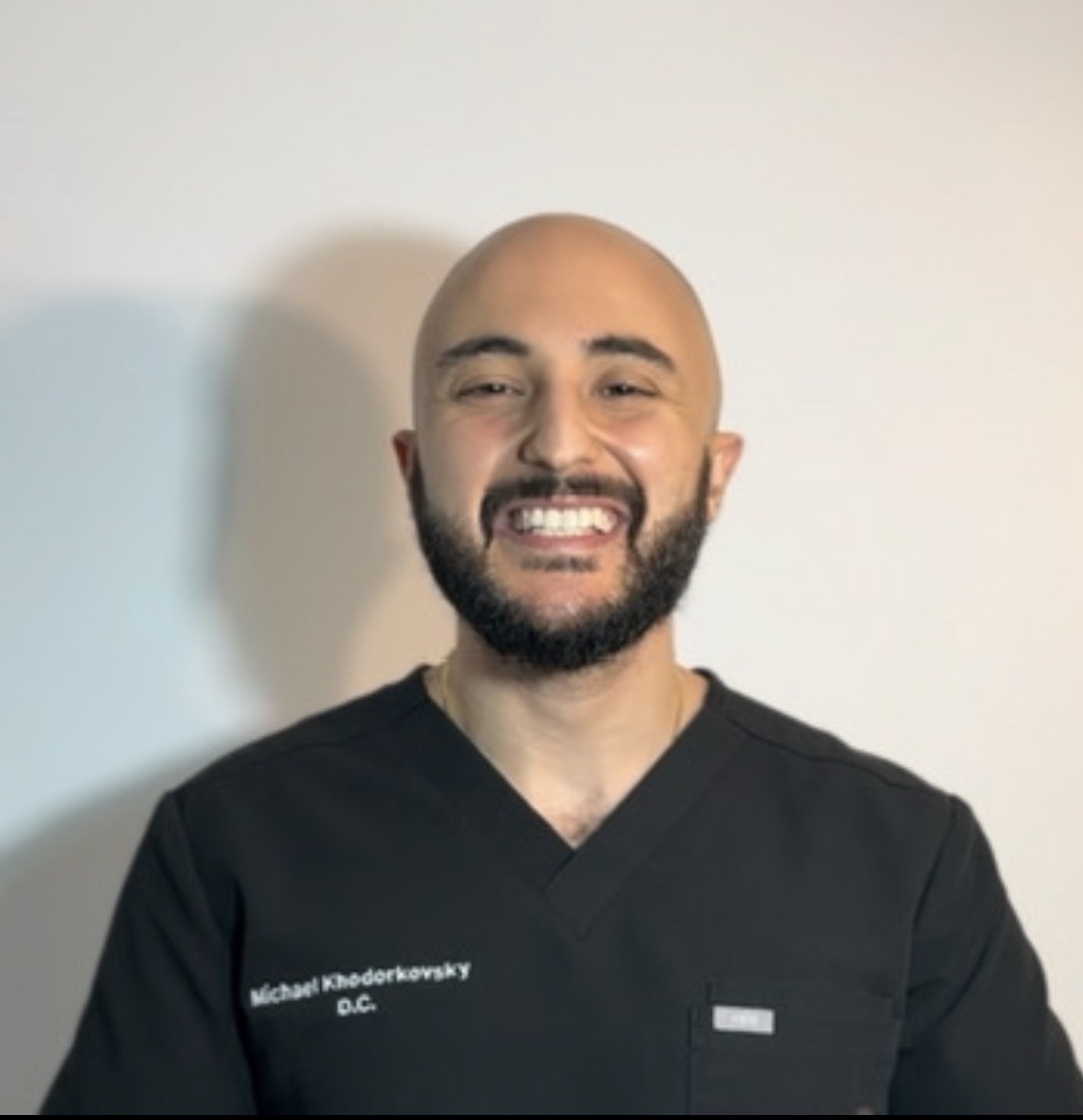
Dr. Michael Khodorkovsky, DC
Doctor of Chiropractic · MK Chiropractic & Wellness · DUMBO, Brooklyn
Dr. Mike is a Brooklyn-based chiropractor and former NCAA competitive athlete. He founded MK Chiropractic & Wellness to offer personalized, results-focused care in DUMBO — seeing every patient himself, every visit.
Ready to get started?
Book your first visit online or call the clinic. Insurance accepted — UHC, Aetna, Cigna, ASH.